Nikonos IV-A Review: Why the Underwater Legend Is Also the Ultimate Land Camera
When most photographers hear or think of the "Nikonos," they immediately think of scuba diving, coral reefs, and underwater photography. The association isn't accidental — the camera's very existence traces back to Jacques-Yves Cousteau, the legendary French naval officer, oceanographer, and filmmaker who fundamentally transformed humanity's understanding of the underwater world. But the path from Cousteau's expeditions to the camera in my hands today is a fascinating story of innovation, collaboration, and design excellence.
By the late 1950s, Cousteau had already co-invented the Aqua-Lung (the first commercially successful open-circuit scuba system), founded the French Navy's Undersea Research Group, and begun his pioneering work aboard the research vessel Calypso. His documentary films and television programs were introducing millions of viewers to the alien beauty of coral reefs and the deep ocean, but documenting these expeditions with existing camera technology was a constant struggle or not possible given the conditions. Traditional cameras required cumbersome, custom-built underwater housings that were expensive, difficult to operate with diving gloves, and prone to catastrophic flooding at depth.
What Cousteau and his team needed was fundamentally different: a camera designed from the ground up to be amphibious, capable of functioning seamlessly both above and below the water's surface without any external housing. Enter Jean de Wouters, a Belgian engineer who in the early 1960s designed exactly that - a revolutionary amphibious 35mm camera. The resulting design was manufactured by La Spirotechnique (a subsidiary of Air Liquide, the French industrial gas company that had partnered with Cousteau on the Aqua-Lung), and sold under a name that honored Cousteau's famous ship: the Calypso.
The Calypso camera, introduced in 1961, was a breakthrough. Its sealed, O-ring-based construction made it genuinely waterproof to significant depths while remaining fully functional as a normal camera on land. But La Spirotechnique was an industrial equipment company, not a camera manufacturer—and the Calypso, while innovative, would benefit enormously from the manufacturing expertise and optical prowess of an established camera maker. Cousteau and La Spirotechnique approached Nikon, then cementing its reputation as one of the world's finest optical and camera manufacturers.
In 1963, Nikon licensed the Calypso design, refined the construction and mechanics with their renowned engineering precision, and reintroduced it to the world as the Nikonos. The collaboration was a perfect marriage: Cousteau's pioneering vision for underwater documentation, de Wouters' innovative amphibious engineering, and Nikon's manufacturing excellence and optical heritage.
For nearly two decades, Nikon continued refining de Wouters' original Calypso foundation. The Nikonos I improved on the Calypso's build quality; the Nikonos II (1968) added interchangeable lenses and a better film advance; the Nikonos III (1975) introduced a more sophisticated shutter mechanism. Each was an evolution of the same essential design that had originated in Belgium — until 1980.
The Nikonos IV-A marked a turning point. It was the first Nikonos that Nikon designed entirely from scratch, a clean-sheet engineering effort that represented nearly two decades of accumulated knowledge about what worked (and what didn't) in amphibious camera design. No longer bound to de Wouters' original architecture, Nikon's engineers were free to reimagine what an underwater camera could be. The result was their most advanced amphibious camera yet: waterproof to 50 meters (160 feet), featuring automatic exposure with aperture priority, and built with the precision and optical excellence that made Nikon famous.
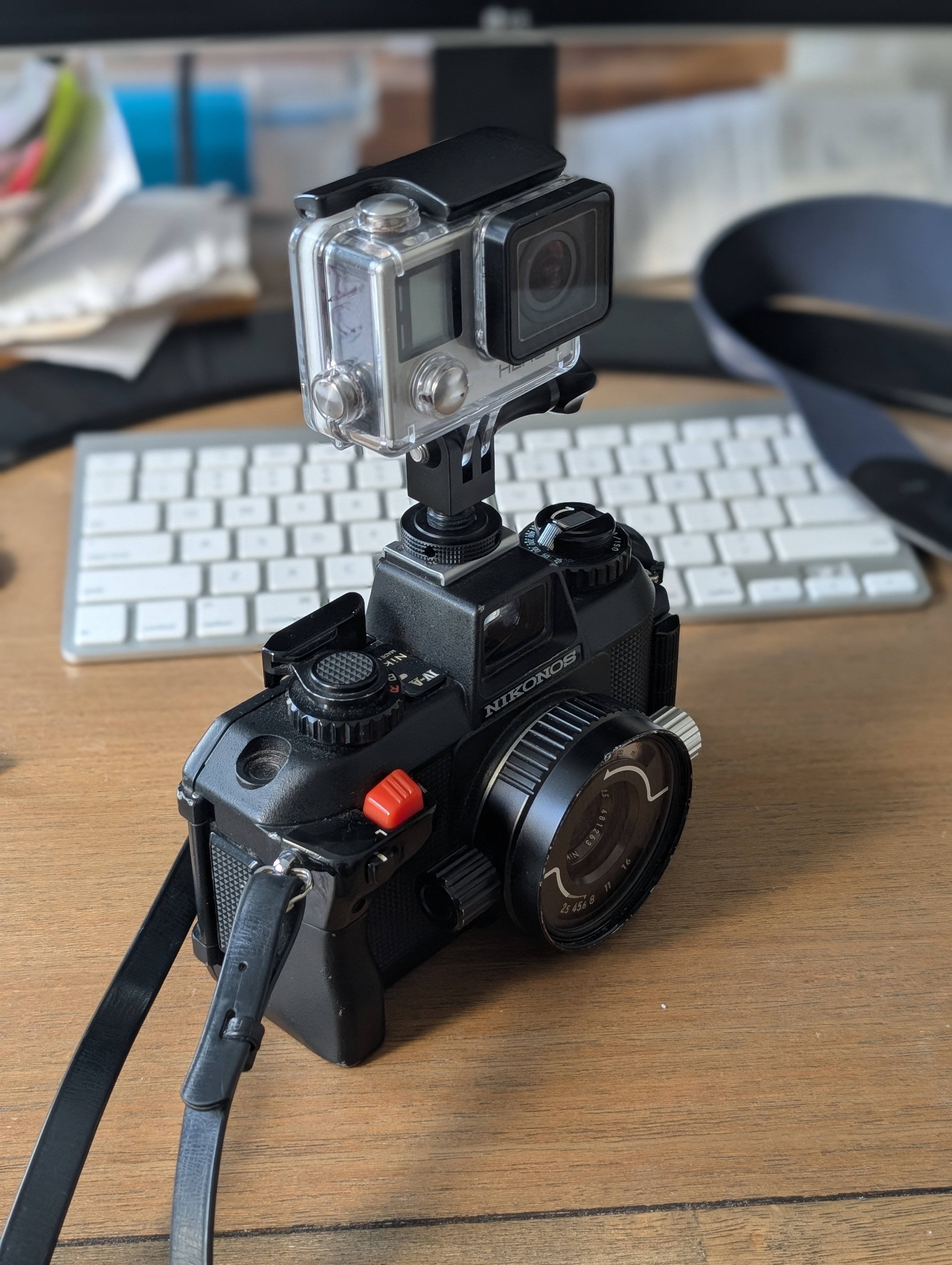 I have yet to field this setup out and about on a photo session yet, but damn it looks exciting - GoPro + Nikonos.
Built for Extremes
While the IV-A certainly earned its reputation as one of the finest underwater cameras ever produced, dismissing it as merely a specialized tool for aquatic photography does a disservice to what is arguably one of the most versatile and bulletproof 35mm cameras ever created. After years of shooting with the IV-A both above and near the water's surface, I've come to recognize that this remarkable camera deserves recognition not just as an underwater legend, but as an exceptional all-terrain companion for any serious adventure or outdoor photographer — or for someone who simply needs a more rugged, worry-free 35mm camera.
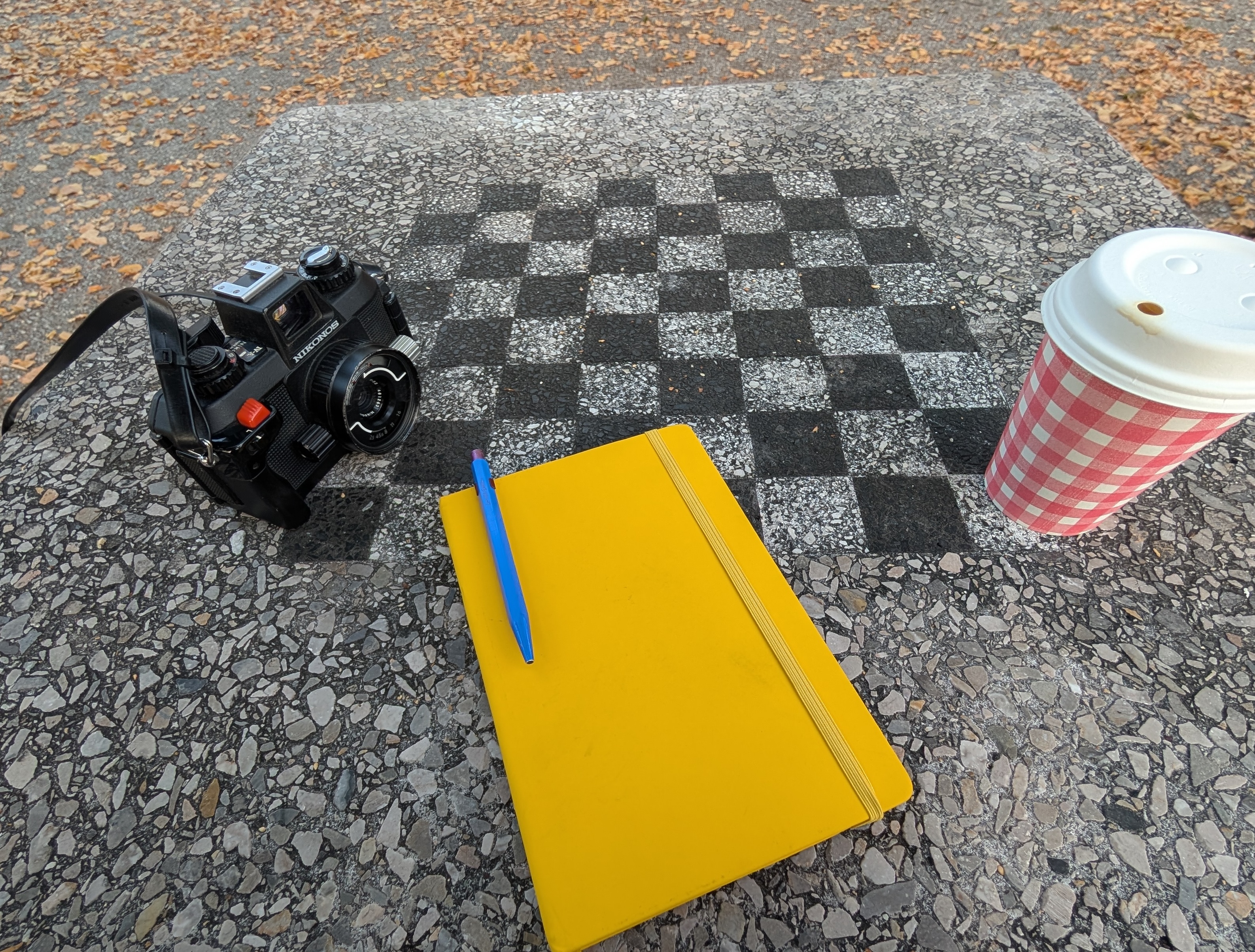 In October 2025, I was traveling in Europe and decided to have a coffee at one of my favorite spots. The Nikonos casually sits on a rough concrete and rock table (along with my notebook and half-consumed cappuccino) - it's so rugged and tough that it becomes routine to set it down in ways you simply can't do with a regular camera.
The camera's rangefinder-like design, while unusual for a Nikon of its era, was a deliberate choice that allowed for a completely sealed system without the complexity of a mirror mechanism. This decision would prove prescient, creating a camera that was not only waterproof but incredibly robust and reliable in any environment. The IV-A features aperture-priority automatic exposure (a first for the Nikonos line), a manual mode that locks the shutter to 1/90 sec for flash sync, and oversized controls designed to be operated with diving gloves at depth. Focusing is done via zone focusing on the lens barrel rather than through a coupled rangefinder — you estimate distance and set it manually, a system that becomes intuitive after a few rolls.
The waterproof design means sudden downpours, river crossings, or even accidental drops into water become non-events rather than equipment disasters (there are, however, special care instructions for operating this camera in and out of salt water). I've shot with my IV-A through heavy rain and dense, heavy fog, a situation where I would have otherwise had to pack my gear away. This has allowed me to operate comfortably in an environment I otherwise couldn't, capturing moments (in higher contrast - water does that) that otherwise would have been missed. The peace of mind that comes from knowing your camera can handle whatever nature throws at it is liberating and provides a creative experience that invites one to push the boundaries of photography. The camera is capable of underwater photography, although that is not something I have experimented with personally yet (warm, shallow waters are far from my home).
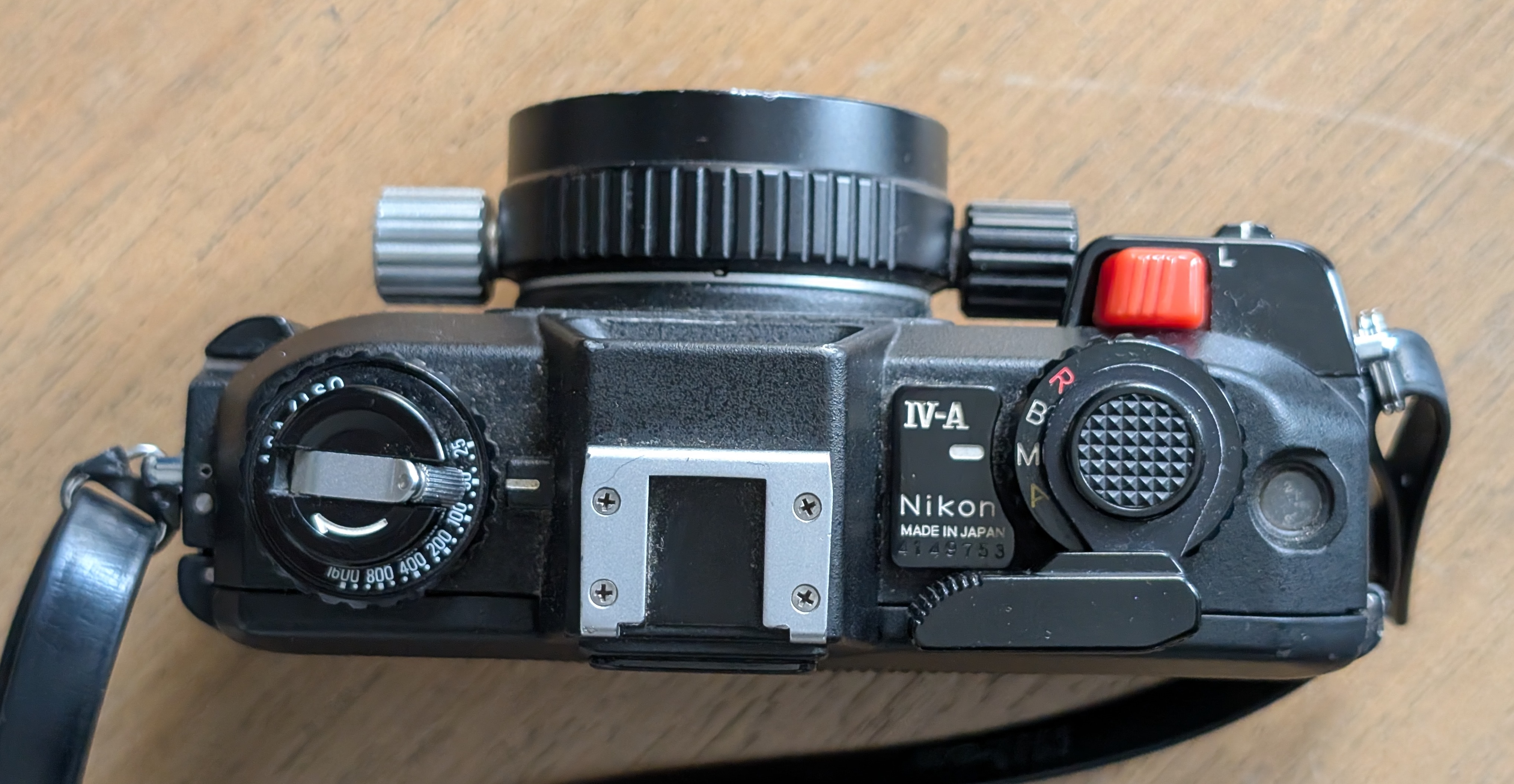 The controls of the camera are big, easy to manipulate, and very easy to read. There's a lock in front of the large, impossible to miss shutter release button, to protect from accidental exposures. Just on top of that shutter button are the controls for the modes, along with an incredibly sturdy, large film advance lever that can be operated comfortably with gloves underwater.
Beyond water resistance, the IV-A is simply overbuilt for dry-weather, on the ground photography. The camera body is machined from solid metal components designed to withstand the crushing pressures of deep water — making it - well, the body shell anyway - virtually indestructible under normal surface conditions. I've dropped mine onto hard pavement, knocked it against tree branches while hiking, and comfortably left it next to the pool with small children present. I distinctly remember shooting some street photography one day when the 45+ year old strap snapped while the camera was resting on my shoulder, sending it rocketing towards the pavement. The camera bounced once or twice. I quickly picked up the camera and finished crossing the street, assuming the worst, but the camera had a small new scratch and not a single dent to any component. I secured the broken strap and kept shooting. While using other camera equipment often comes with handling with care, operating with the IV-A is a far more forgiving and relaxing experience.
The sealed design also means that dust, sand, and debris — the enemies of precision camera mechanisms — usually cannot penetrate the camera body during normal operation. Beach photography, desert expeditions, and construction site documentation become more effortless when you're not worried about the operating environment impacting the camera. At the end of my more rugged or dust-prone sessions, I typically rinse off the camera under tap water in my kitchen sink and dry it off with a hand towel. Can you say that's possible with another interchangeable lens 35mm camera?
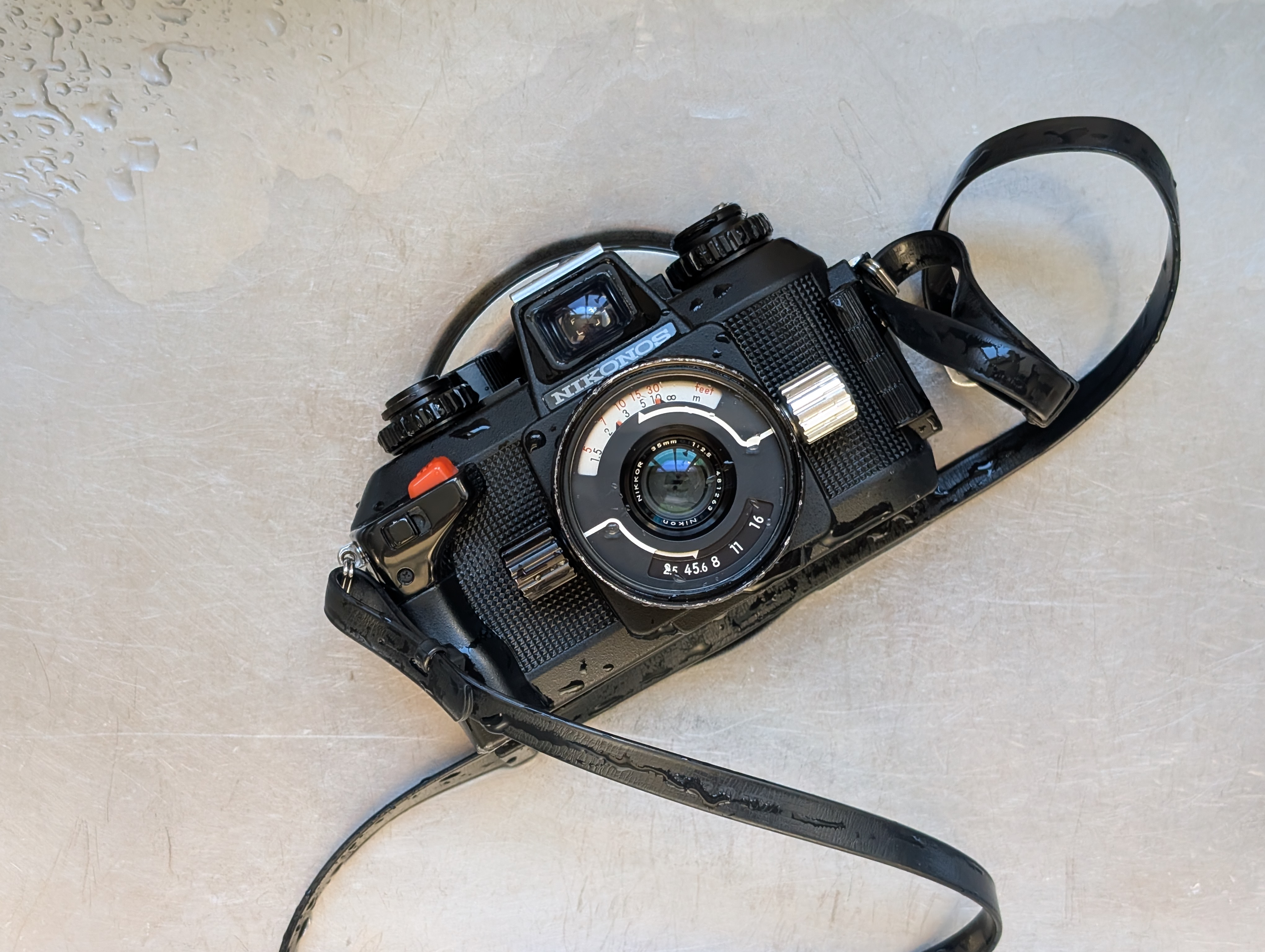 My Nikonos getting washed in the sink and rinsed after a few sessions.
The only caveat to the camera's all-weather performance that I have experienced is the camera's hot weather performance, specifically when the camera is exposed or left out in direct sunlight and hot air - desert climates or beaches without any exposure to water. The all-metal, black body quickly heats up in these conditions, potentially putting your precious film at risk and making it a bit painful (literally) to operate until it cools down or you give the camera a quick soak in some water. It's not a situation I encounter often with this camera - at about 1.7 pounds (or about 772 grams - body only), it is heavy and not something I intentionally carry in the heat. However, once or twice I've needed to use the strap to move the camera into the shade to cool the camera, and it is something to keep in mind if you are considering purchasing one of these cameras. Additionally, if used fully underwater and a flood occurs, the IV-A's electronics make recovery difficult or impossible — a significant departure from the earlier Nikonos I, II, and III, which were entirely mechanical and could often be disassembled, dried out, and returned to service after a flooding incident. The IV-A and later Nikonos V share this vulnerability; a flooded circuit board typically means the end of the camera.
Nikkor Optics: Dual-Purpose Excellence
While the Nikonos IV-A's rugged construction gets most of the attention, the camera's optical system deserves equal if not higher praise. The handful of Nikkor lenses designed for the Nikonos system represent some of the finest optics ever produced, engineered to perform flawlessly both above and below water – a technical challenge that pushed Nikon's optical designers. The dual-environment requirement meant these lenses had to compensate for the refractive properties of water and, in the case of the W-Nikkor 35mm f/2.5, perform equally as well above the water, too. The result was a series of optics with exceptional correction for distortion, chromatic aberration, and edge sharpness that many lenses of the era couldn't match. The 35mm f/2.5 that I often use delivers images with a distinctive character – incredibly sharp, with beautiful color rendition and excellent contrast (and with a pretty fast speed, too).
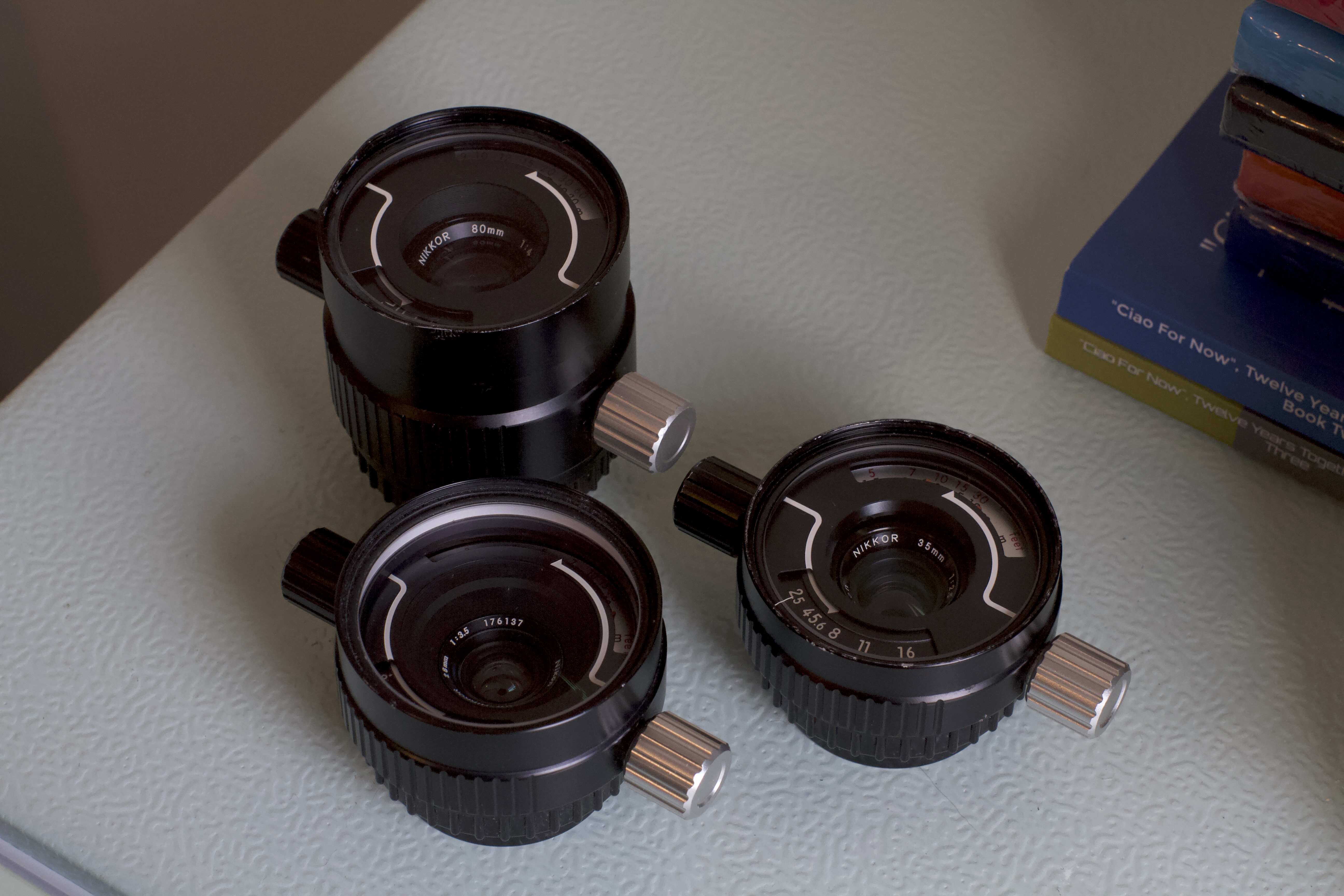 The Nikkor lenses designed for the Nikonos system remain exceptional. The Nikkor 80mm f/4, W-Nikkor 35mm f/2.5 and UW-Nikkor 28mm f/3.5 are shown here (clockwise from top left).
Nikon produced a small but purposeful range of lenses for the Nikonos system, each designed for specific use cases. The "UW" (underwater) lenses are optically corrected for the refractive index of water and produce soft, distorted images on land — they're strictly for aquatic use. The "W" (water) lenses are truly amphibious, performing beautifully both above and below the surface. The 80mm is a land-only telephoto, a rarity in the system (a lens I have in my tool bag but have not used extensively).
- UW-Nikkor 15mm f/2.8 — Underwater only. Ultra-wide, requires external viewfinder.
- UW-Nikkor 20mm f/2.8 — Underwater only. Wide-angle, requires external viewfinder.
- UW-Nikkor 28mm f/3.5 — Underwater only. Wide-angle, requires external viewfinder.
- W-Nikkor 35mm f/2.5 — Amphibious. The workhorse — excellent on land and underwater.
- Nikkor 80mm f/4 — Land only. Telephoto, requires external viewfinder.
Note on external viewfinders: The IV-A's built-in viewfinder shows framelines for the 35mm lens only. For other focal lengths, Nikon produced matching optical viewfinders that mount to the camera's accessory shoe — the DF-10 for 80mm, DF-11 for 15mm, DF-12 for 20mm. These were designed with large, easy-to-see framelines suitable for use through a diving mask. On land, they work fine but feel a bit cumbersome; most photographers shooting the Nikonos above water stick with the 35mm for this reason.
These lenses have maintained their reputation for optical excellence. Contemporary lens manufacturers like Omnar have recognized the exceptional quality of these optics, extracting the original optical units and iris from the W Nikkor 35mm f/2.5 and rehousing them into their own rangefinder-coupled M-mount platform – the NK35-25. The process even removes the optical flat that was originally part of the waterproofing, improving the already excellent performance of the original amphibious design. This isn't mere nostalgia – it's recognition that the optical formulae developed for the Nikonos system represent genuinely superior designs that remain competitive with today's best lenses, enough so to operate a small but high-end optical lens business.
An Incredible Viewfinder
Of the several cameras in my tool kit, the Nikonos IV-A easily has the most sublime, expansive, and clear viewfinder — what a joy it is to use. Designed to work underwater through a diving mask, the viewfinder is substantially larger than those on most cameras, even modern ones. Used on land, it's all-encompassing — like stepping into the frame of your photograph. I find it especially useful for street photography: the viewfinder shows not only what's in frame but quite a bit outside it, giving me the context to anticipate movement and pan in any direction to capture the decisive moment. It's quite the experience.
The bright framelines etched into the viewfinder correspond to the 35mm lens's field of view, with additional marks indicating parallax correction at close focus distances. Unlike rangefinder cameras with coupled focusing, the Nikonos relies on zone focusing — you estimate or measure distance and set it on the lens barrel. The framelines simply show you what you're capturing, with generous space around them to see approaching subjects or compose on the fly. It's a simple, elegant design.
A Camera Ahead of Its Time
The Nikonos IV-A represents something increasingly rare in today's photography world: a tool built without compromise for a specific purpose that accidentally became perfect for something much broader. In an era of disposable electronics and planned obsolescence, the IV-A stands as a testament to over-engineering and longevity — the demands of underwater photography created a camera so robust that it excels in virtually any situation above water too. The large, tactile controls (designed to operate with diving gloves) make it comfortable and intuitive to shoot; it's easily my most ergonomic camera.
For photographers seeking an escape from the anxiety of equipment management, the IV-A offers something precious: complete confidence in your tools. When your camera can survive being submerged in saltwater, everything else becomes trivial. Rain, dust, drops, and sitting in sand are transformed from photography-ending situations into non-events. The Nikonos IV-A was designed for the depths, but its true legacy may be as the ultimate surface camera — a rugged, reliable, optically superb tool that lets photographers focus entirely on what matters: capturing the world around them without fear or limitation.
We occasionally have Nikonos cameras and lenses in stock—check out our store.
Further reading:
- Camera-Wiki: Nikonos — Comprehensive history and specifications of the Nikonos series
- Nikonos IV-A Repair Manual (PDF) — Detailed technical service manual for the IV-A
Sample photographs shot on the Nikonos IV-A with W Nikkor 35mm f/2.5:
 New York Times tech workers protest pay and other work conditions or circumstances in New York City, November 2024 (unknown expired film). Notice how there is virtually zero edge distortion from the Nikkor 35mm lens.
 Streets of Chinatown. San Francisco, California in January 2025. Kodak XX (Double-X) 5222, ISO 100.
 Streets of Chinatown. San Francisco, September 2025. Kodak Vision 2 5201, ISO 50.