Rollei B35 Review: Why This Underrated Compact Film Camera Deserves More Praise
In the world of compact 35mm film cameras, the Rollei 35 series has achieved legendary status. When it debuted in 1966, it was the smallest full-frame 35mm camera ever made—a feat of German engineering that fit a genuine Carl Zeiss lens into a body small enough to slip into a shirt pocket.
The camera was the brainchild of Heinz Waaske, chief engineer at German camera maker Wirgin. Around 1960, as subminiature 16mm cameras hit the market, Waaske had an insight: buyers weren't drawn to the tiny film format itself—they wanted a smaller camera. Having already engineered 16mm and 35mm SLR designs, he set out to build a full-frame 35mm camera in a housing just one-third the volume of contemporary viewfinders. Working in his living room during spare hours, Waaske completed the first technical drawings in 1962, with prototypes following at Wirgin before the design was eventually acquired by Rollei.
To achieve this miniaturization, Waaske devised several elegant solutions: a collapsible lens that let the camera shrink when not in use, a split shutter mechanism with timing in the body and blades in the lens tube, and a compact five-sprocket film transport. These innovations debuted at Photokina 1966 to significant acclaim.
Its precision construction and optical quality made it a favorite of everyone from street photographers to astronauts to royalty, and over 2 million units were produced across various models. Take a look at this photograph below - who do you see? What camera are they using?
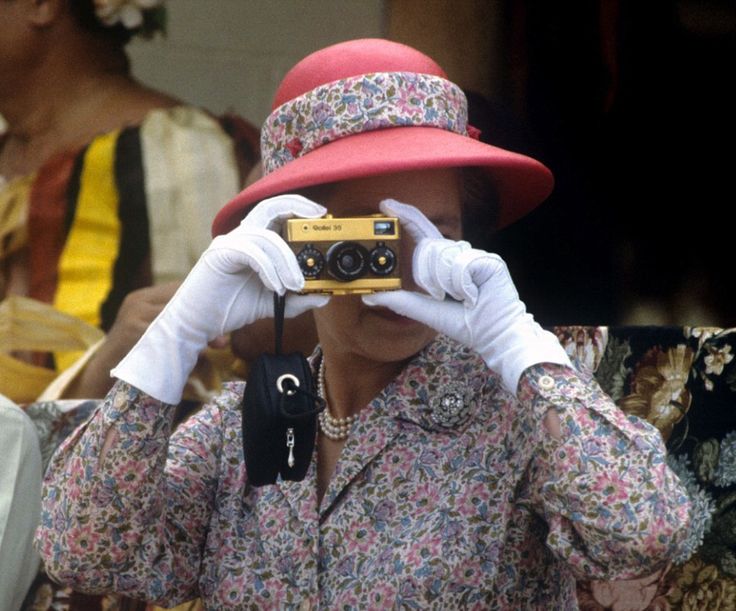 Queen Elizabeth II with her Rollei 35 (Tessar)
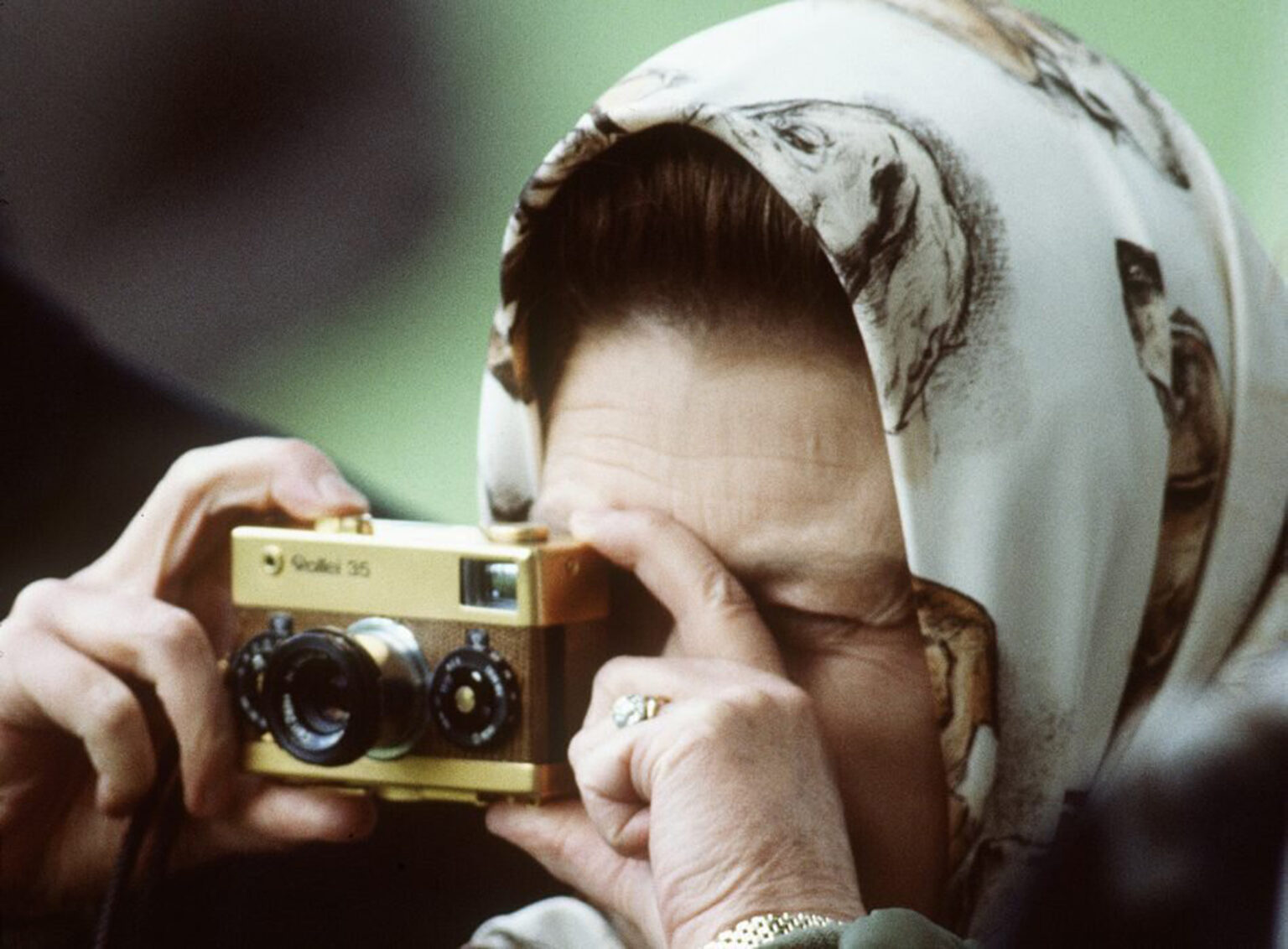 Her Majesty was known to favor the Rollei 35 (Tessar) for its compact size and exceptional optics
These meticulously crafted German pocket cameras have been cherished by street photographers and everyday shooters for decades. Stephen Shore famously carried a Rollei 35 while shooting American Surfaces in the early 1970s—its unassuming size perfectly suited his candid, snapshot-style approach to documenting America. And as you can see in the photographs above, even Queen Elizabeth II was a fan, often spotted with a gold-plated Rollei 35 (Tessar) at public events throughout the 1970s.
While the premium Rollei 35 (with its Tessar lens) and the top-tier Rollei 35S (with its Sonnar lens) typically get most of the attention and thus command higher prices, there's an often overlooked member of the family that deserves serious reconsideration: the humble and simpler Rollei B35.
The Underdog of the Rollei 35 Family
Released in 1969, the B35 was Rollei's answer to a simple question: could they bring the Rollei 35 experience to a wider audience? Crucially, Rollei kept all of Waaske's core innovations—the collapsible lens, split shutter, and compact film transport. What they simplified was the lens formula (a 3-element Triotar), the meter (self-powered selenium instead of battery-dependent CdS), and the control layout (rings on the lens barrel). The result was a camera that cost significantly less—but as we'll see, those "compromises" turned out to be features in disguise.
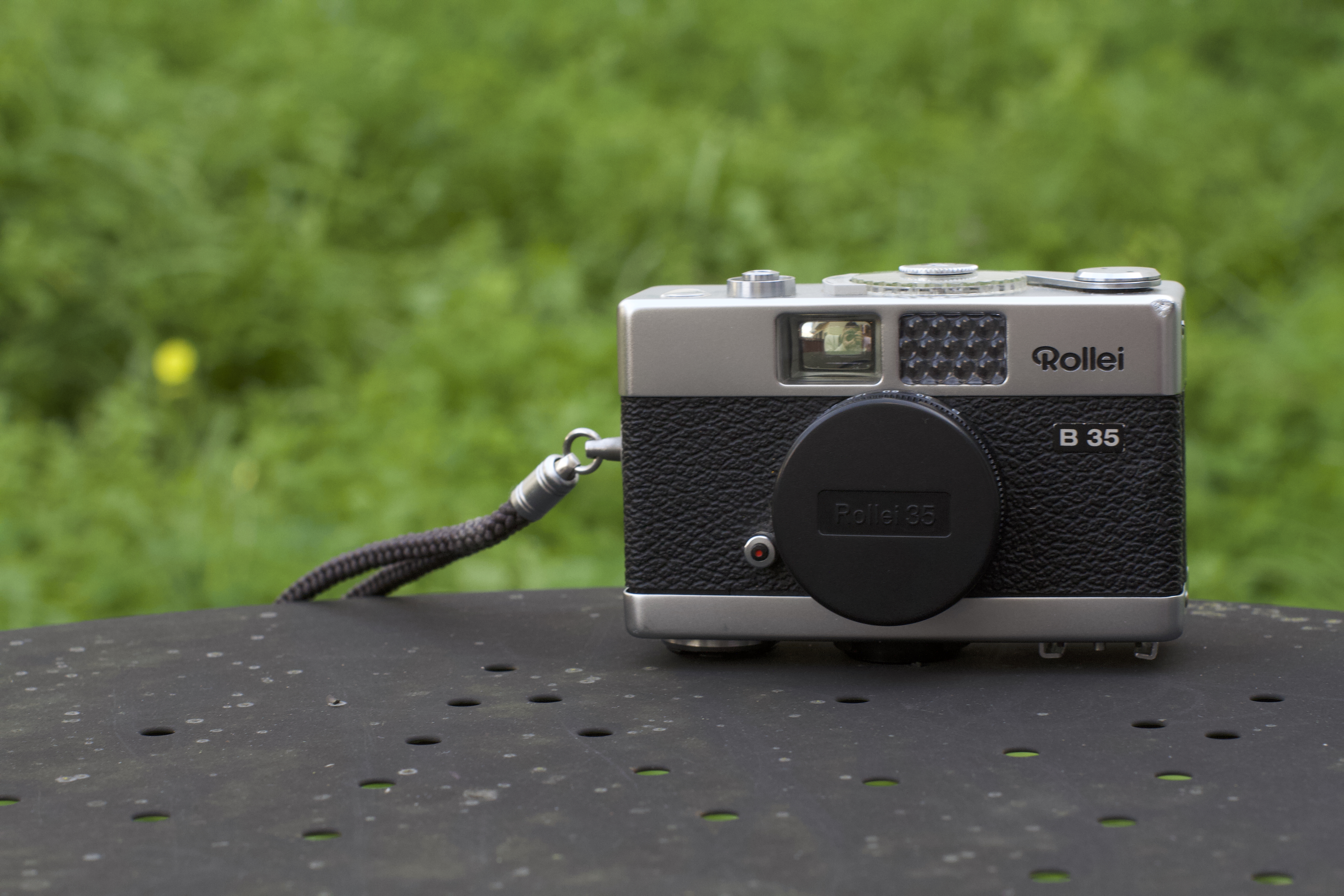 The compact form factor that made the Rollei 35 series legendary. It's a handsome design, even today, 56 years later.
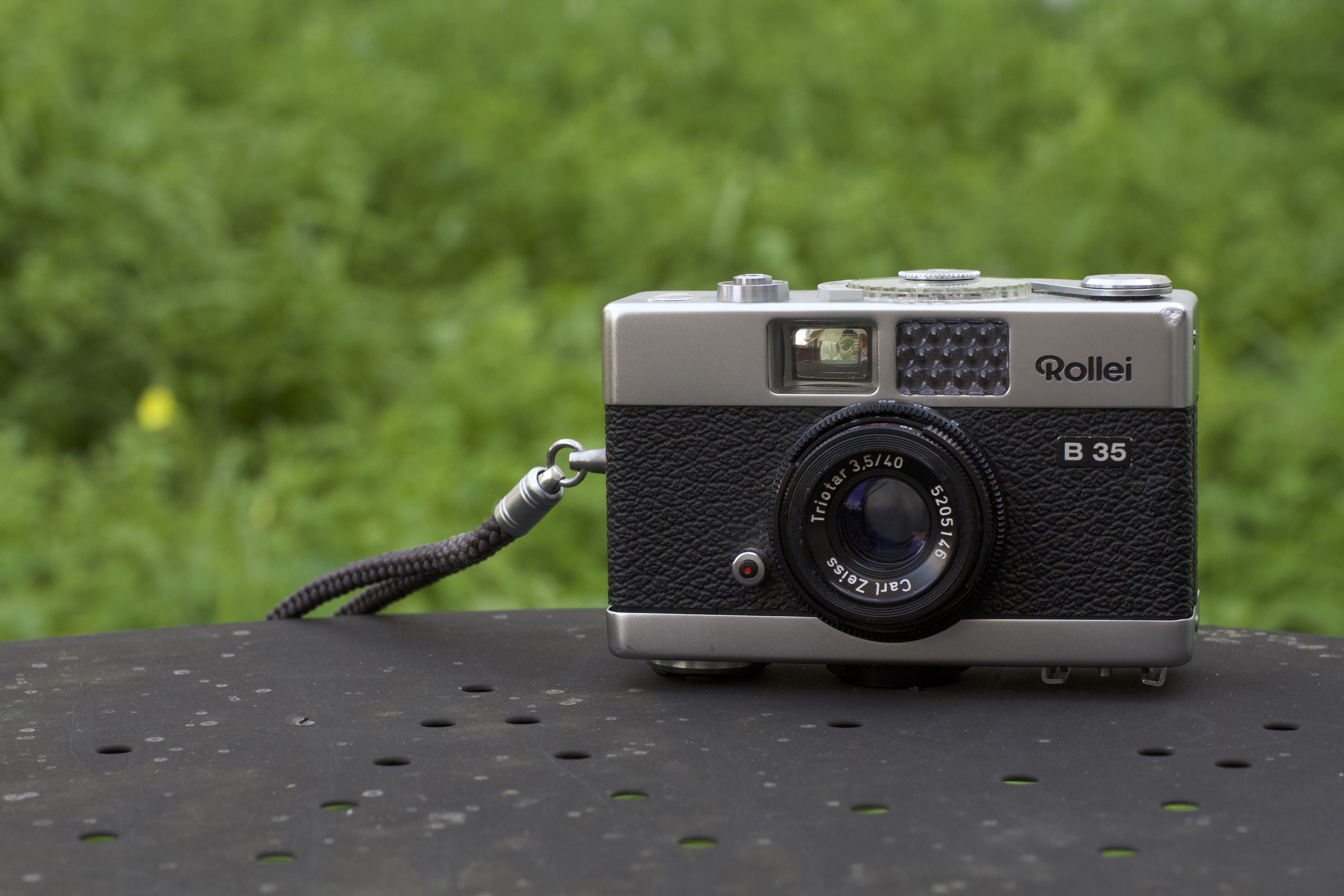 Early Rollei 35 cameras, like the one shown, had their lenses and bodies assembled in Germany (later assembly occurred in Singapore, first with German-made then locally-made lenses with manufacturing licensed by Rollei from Zeiss).
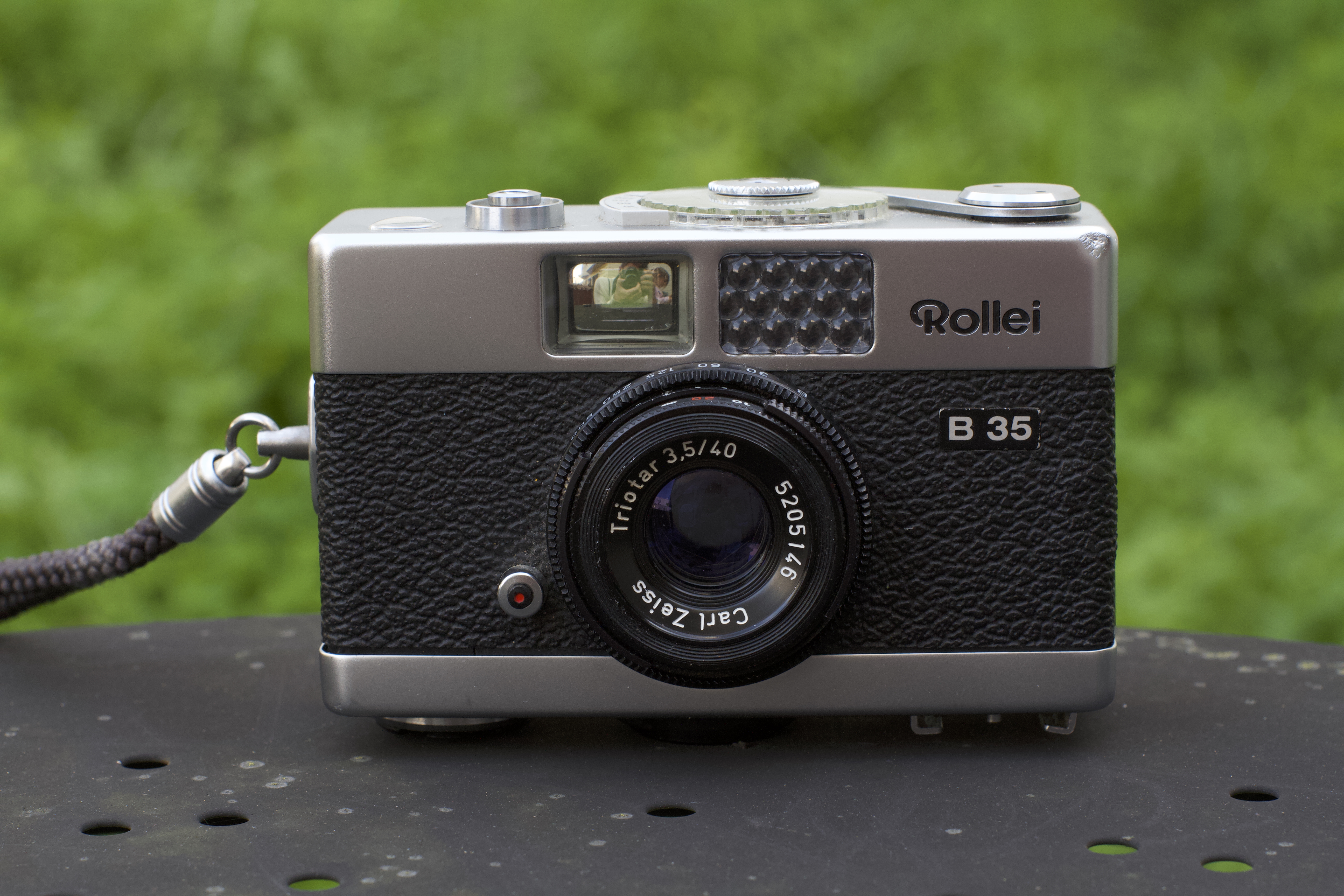 This camera seems to have debuted with a selfie mirror, a term not coined until decades later. Nevertheless, due to the camera size and form factor, it's possible to use the viewfinder glass as a 'selfie mirror'
Never Worry About Batteries Again
One of the B35's greatest strengths is its selenium light meter that requires no batteries whatsoever.
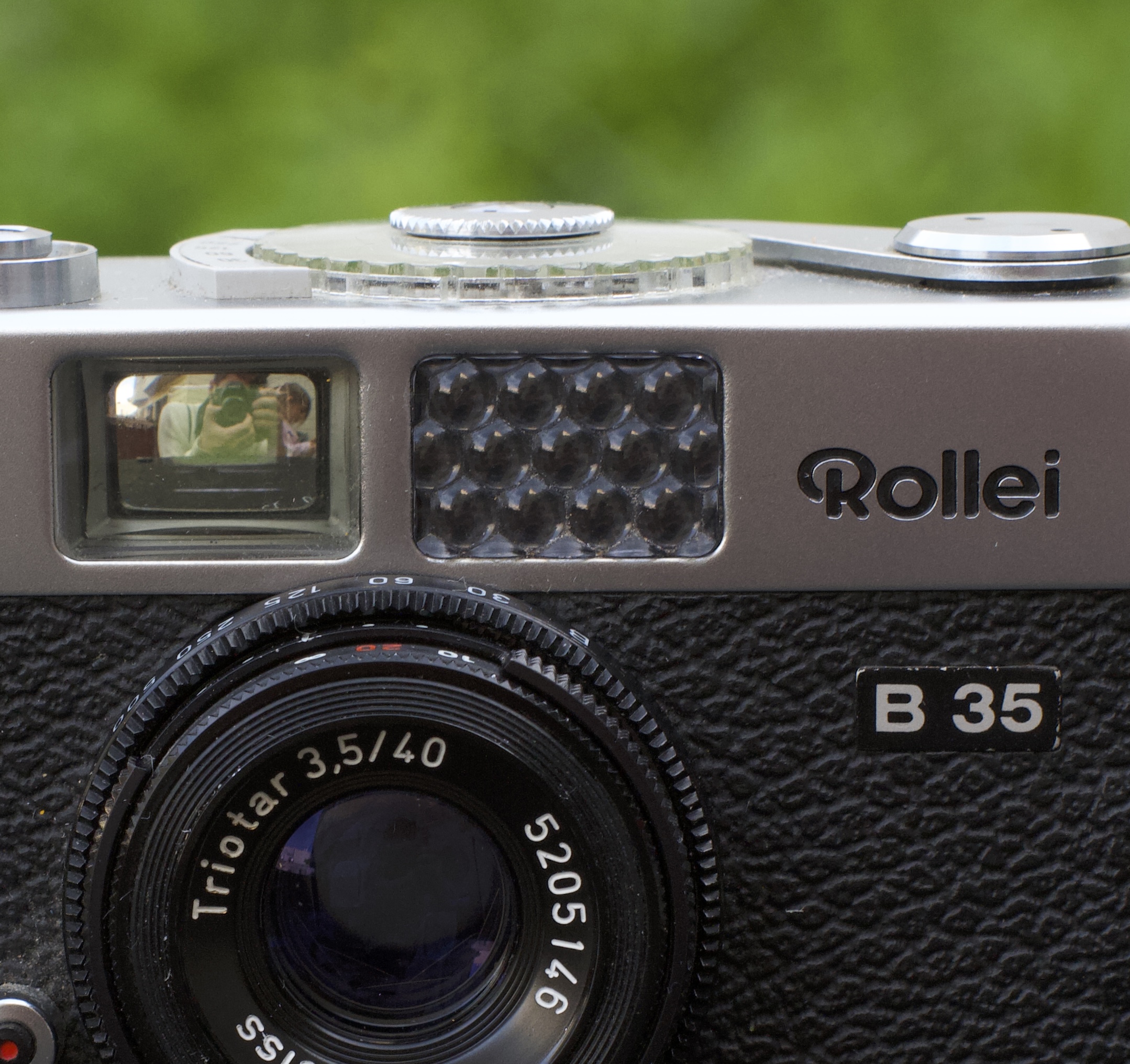 The selenium meter cells that power the B35's battery-free operation (right) and viewfinder (left).
While the more expensive Rollei 35 and 35S models feature more accurate CdS light meters, they require increasingly hard-to-find batteries. Even worse, these battery-powered meters drain continuously whenever they're exposed to light—even when the camera is off. This has resulted in a myriad of solutions, some of which, shall we say, are effective but not so elegantly designed?
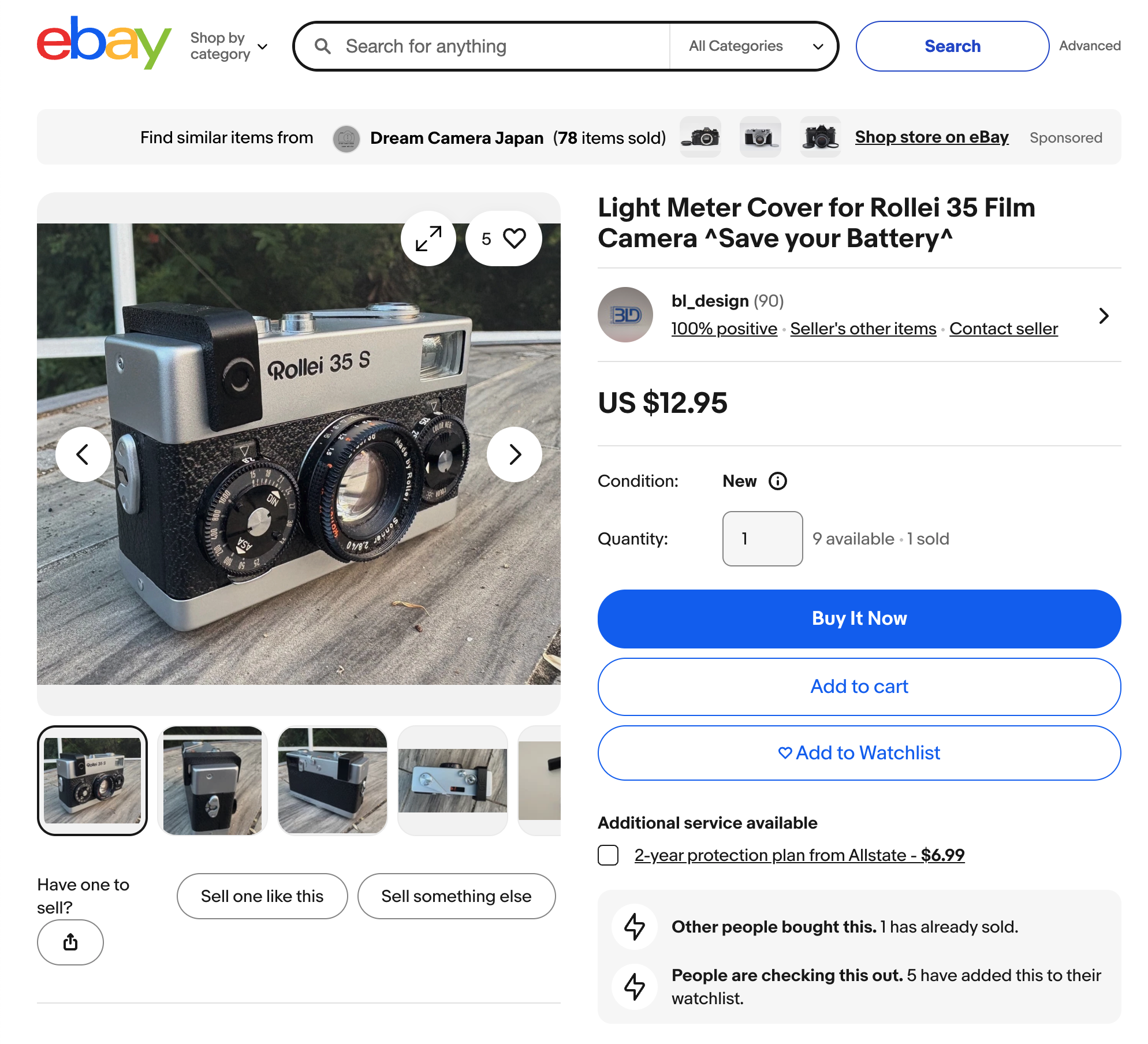 This 'light meter cover' is designed to clip over the Rollei 35's light meter and block it so it doesn't drain when the camera is not in use.
The B35's selenium meter sidesteps the battery issue entirely, but it's not without trade-offs. Selenium cells can degrade over time, and they struggle in low light where CdS meters actually excel. If you're buying a B35 today, testing the meter accuracy is essential—many still work beautifully after 50+ years, but others have faded. The good news? Even with a weak meter, the B35 remains fully functional with an external meter or the Sunny 16 rule. The selenium meter in my current example has remained accurate with proper care—keeping the meter window covered when not shooting and storing the camera away from prolonged sunlight and moisture. I've handled other B35s from the early 1970s with meters that still respond well. There's something deeply satisfying about using a fully mechanical camera that doesn't depend on any power source beyond the photographer's own input.
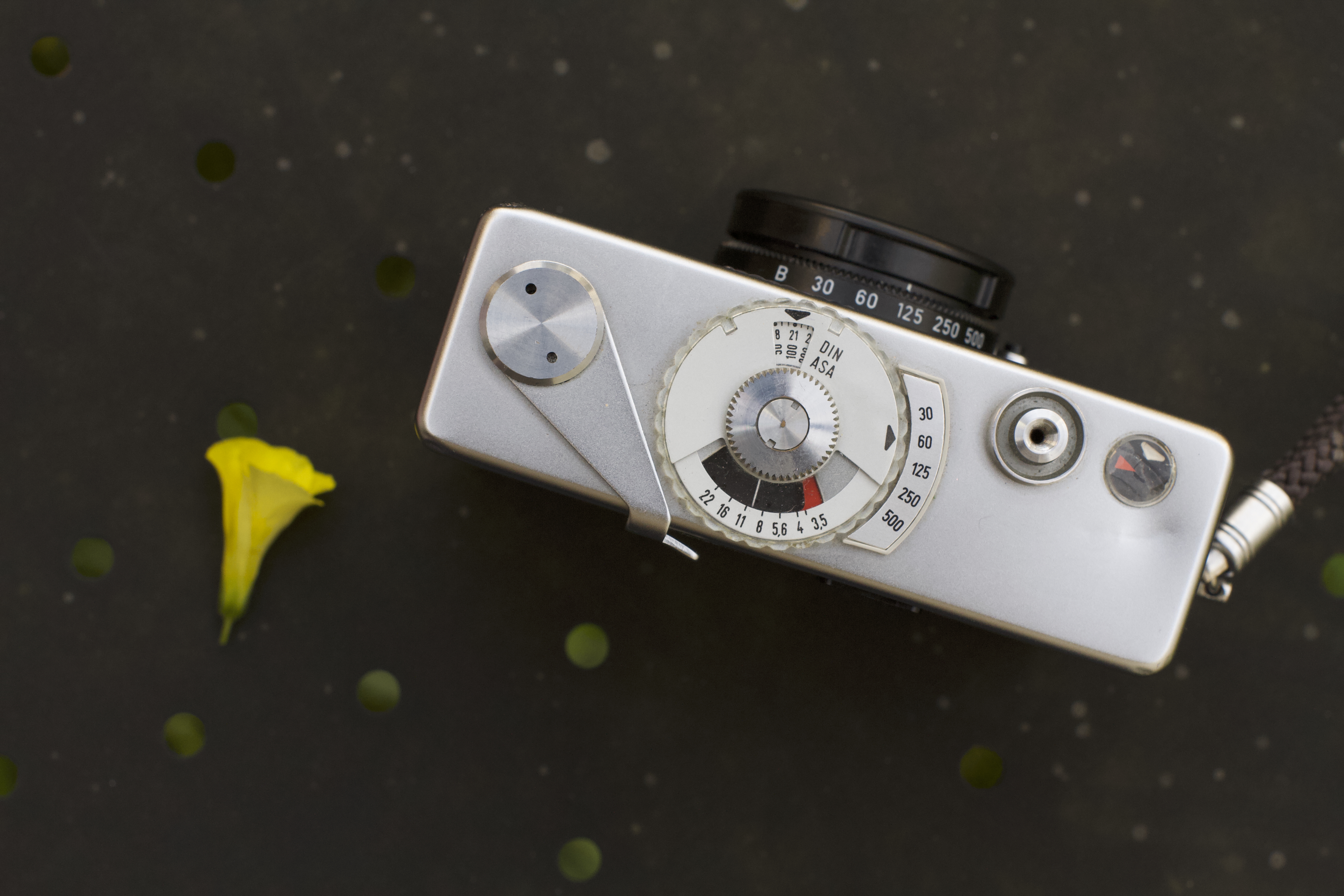 The top of the Rollei B35, showing the shutter advance lever (left), light meter readout (center), and the shutter release and shutter count (right).
Superior Ergonomics for Practical Shooting
The B35 actually offers better handling than its pricier relatives in several key aspects.
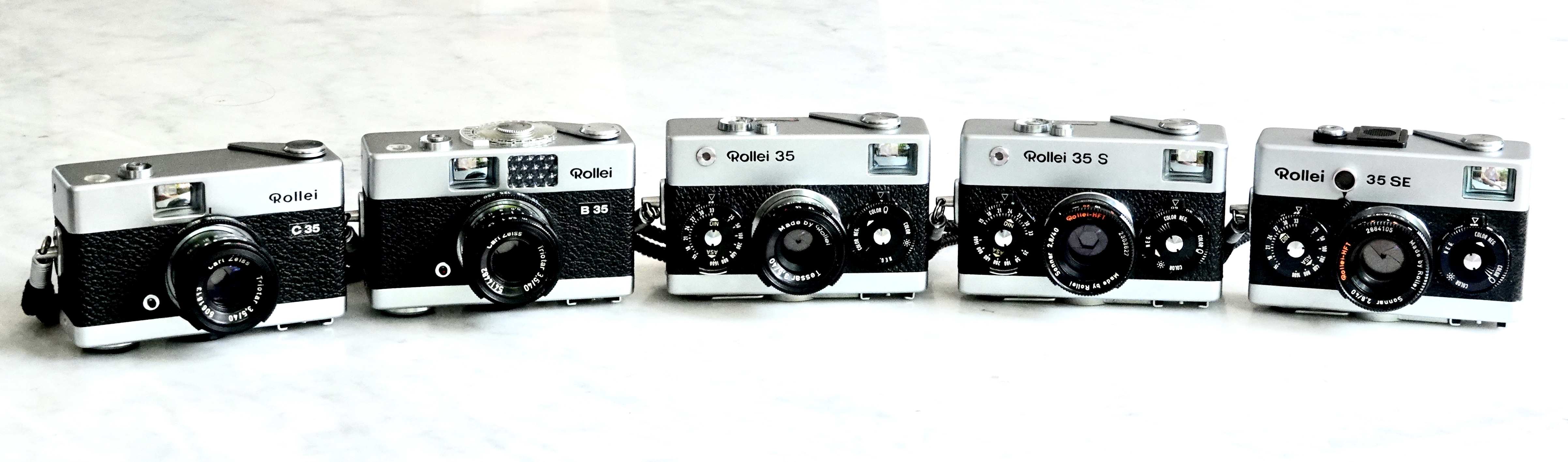 The Rollei 35 family: C35 (no meter), B35 (uncoupled meter), 35/35T (coupled meter, Tessar), 35S (coupled meter, Sonnar), and 35SE (coupled meter in viewfinder, Sonnar). Image by Bernard Tan via Camera-Wiki.
On the standard Rollei 35 and 35S, the CdS meter cell window sits on the front face of the camera, positioned toward the right side as you hold it. This happens to be exactly where your right middle finger naturally wants to grip the body. The result? Many shooters find themselves inadvertently covering the meter cell while shooting, leading to inaccurate readings—or they contort their grip to avoid the meter window entirely, which compromises stability.
The B35 takes a different approach. Its selenium meter cell is positioned more centrally on the camera face, above the lens. This placement keeps the meter window clear of your natural grip, and since selenium meters are "always on" (they generate current from light without a battery), you don't have to worry about accidentally triggering a reading—it's always reading, and your job is simply to keep it unobstructed when you glance at the needle.
Perhaps even more significant is the placement of the aperture and shutter speed controls. The premium Rollei 35 and 35S feature these as small knurled dials on the front body plate—right where you'd naturally want to grip the camera. Adjusting exposure means releasing your grip momentarily.
The B35 moves both controls to rings around the lens barrel, leaving the camera body uncluttered. This gives your fingers a clean surface to grip, and you can adjust aperture or shutter speed by rotating the lens rings without shifting your hold. Some photographers actually prefer the original front-dial layout for its tactile feedback, but many find the B35's design more intuitive for shooting on the move.
Finally, there's the viewfinder. The standard Rollei 35 and 35S position their viewfinders significantly off-center, on the far left side of the camera back. The B35 moves its viewfinder closer to center, which many find provides a more natural shooting experience—especially over a long day of street photography when you're raising the camera to your eye hundreds of times.
The Lens Question: Is Faster Really Better?
Yes, the Sonnar f/2.8 lens on the Rollei 35S is undeniably superb, and the Tessar f/3.5 on the standard Rollei 35 is excellent as well. But the B35's Triotar f/3.5 holds its own, especially when considering how most street photographers actually shoot.
Let's look at the technical differences between these Carl Zeiss designs:
Sonnar f/2.8 (Rollei 35S): A 5-element design in 4 groups, known for excellent contrast, minimal flare, and exceptional sharpness even at wider apertures. The Sonnar design excels in low-light situations.
Tessar f/3.5 (Rollei 35): A 4-element design in 3 groups, famous for its balanced performance. It offers excellent sharpness at the center with good edge performance when stopped down.
Triotar f/3.5 (Rollei B35): A simpler 3-element design in 3 groups. While it may not have the ultimate resolution of its siblings when shooting wide open, it produces a distinctive rendering that many photographers find appealing.
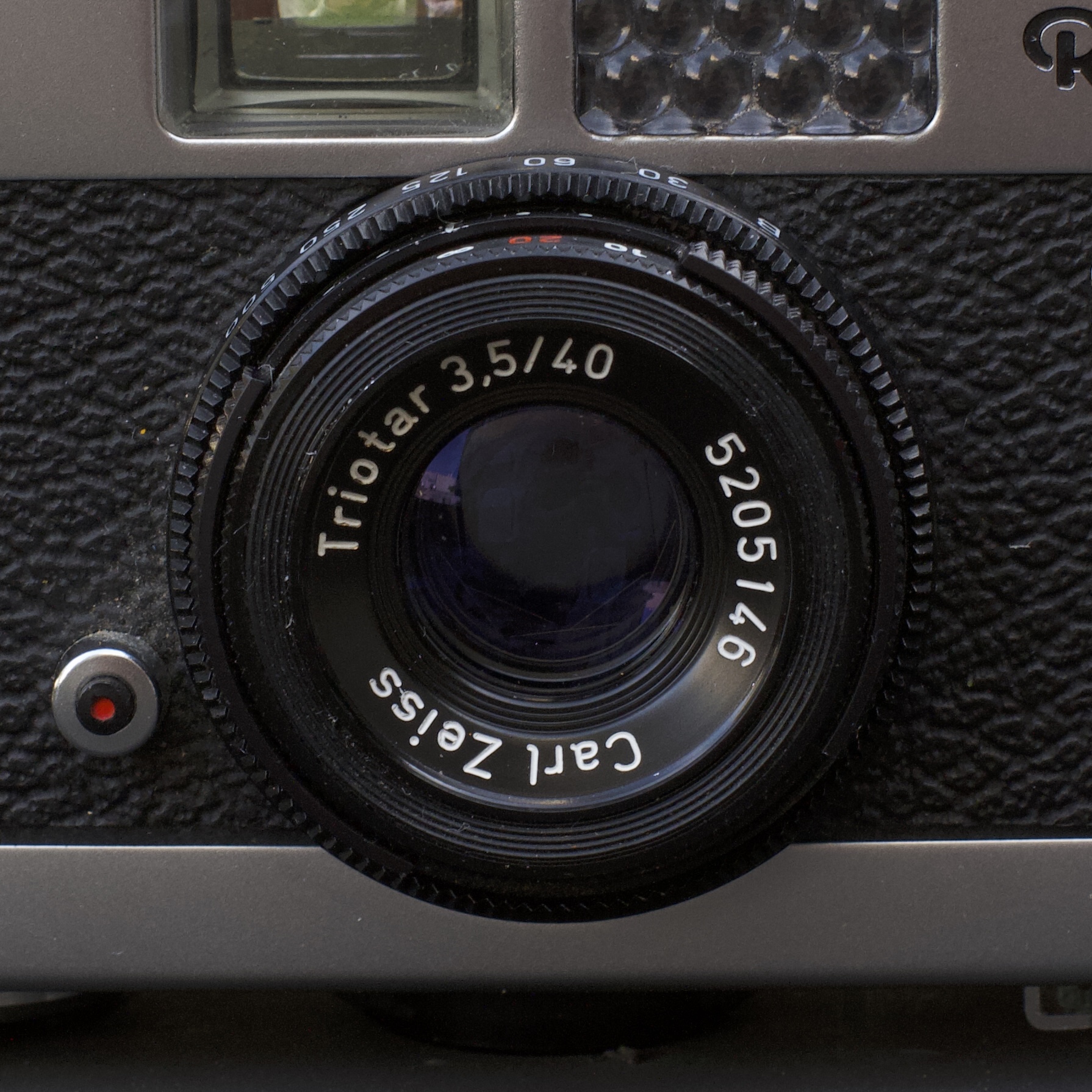 A close up view of the Carl Zeiss Triotar lens on this Rollei B35.
The key point that's often missed: all three are genuine Carl Zeiss designs with the renowned German optical engineering behind them. The Triotar may be the simplest of the three, but a simpler design doesn't necessarily mean inferior results—it's still a capable performer that many photographers have come to appreciate.
For zone focusing and street photography, are you really shooting wide open at f/2.8 very often? In most situations, you're likely stopping down to f/8 or f/11 for sufficient depth of field when zone focusing. At these apertures, the differences between the lenses become much less pronounced, and the Triotar performs admirably.
This is especially true today, with the wide availability of 200, 400, and 800 speed films. Load some Kodak Portra 400 or Ilford HP5, and you'll find yourself shooting at f/8 or f/11 in most daylight conditions without a second thought. Even in lower light, films like Ilford Delta 3200 or Kodak P3200 TMAX give you the speed to stop down when you need depth of field. The Sonnar's f/2.8 advantage mattered more in an era of slower film stocks—today's emulsions level the playing field considerably.
The Triotar design, while simpler than the Tessar or Sonnar, still delivers sharp results with pleasing rendering when used thoughtfully. Many street photographers have discovered that the supposed "limitations" of the Triotar can actually contribute to a distinctive character in their images—a subtle vintage rendering that works beautifully for film photography.
The Joy of Shooting Without Pretension
There's something liberating about shooting with a camera that doesn't carry the same prestige as its siblings. When you've spent top dollar on a pristine Rollei 35S, there's an inevitable hesitation to take it into challenging environments. Rain? Crowded streets? Dusty conditions? You might think twice. The B35 frees you from that anxiety entirely. Comfortable applying the Sunny 16 rule? Consider the meter-free C35 also (however their rarity usually comes with the expected increase in market value).
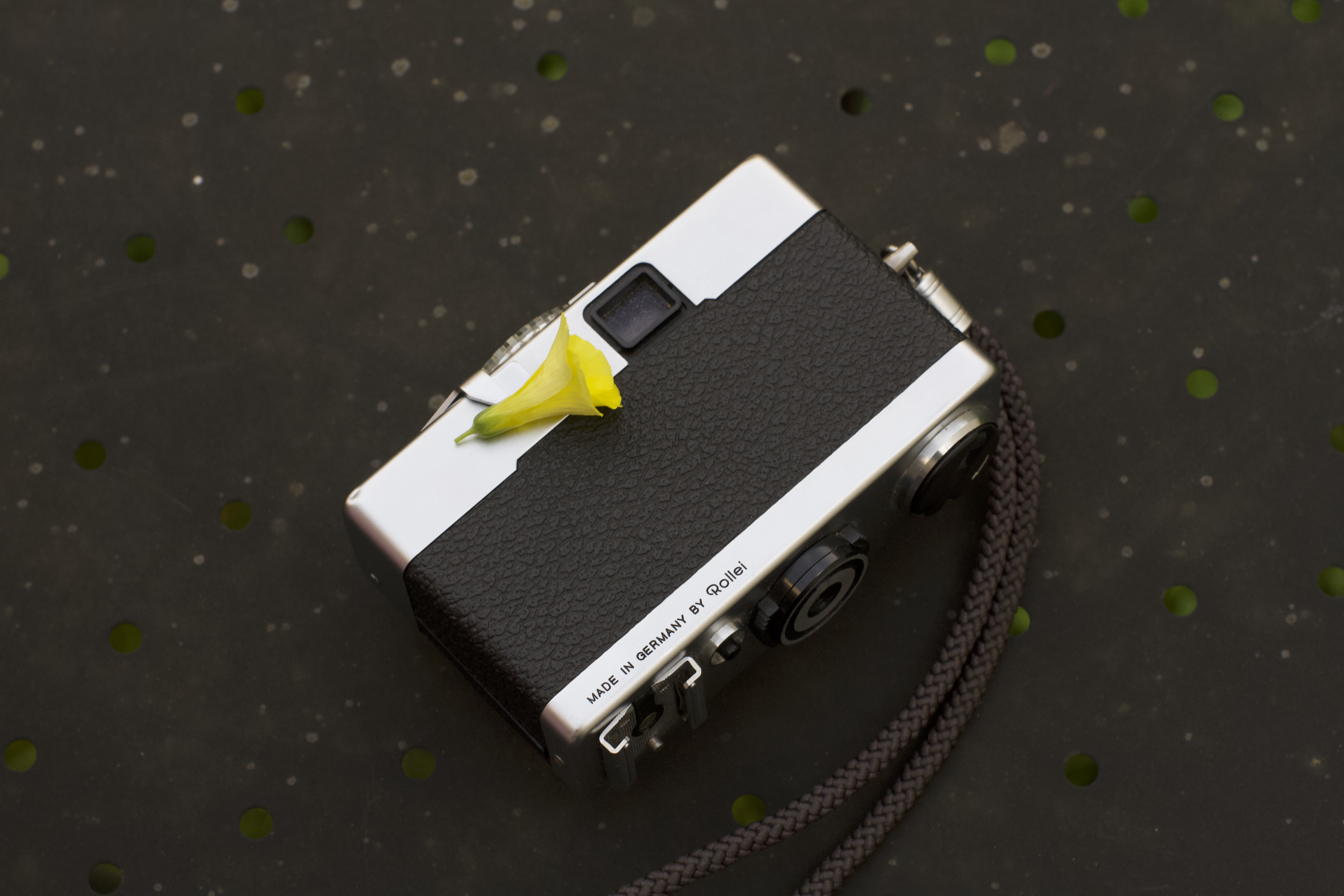 The handsome, no fuss design continues on the back.
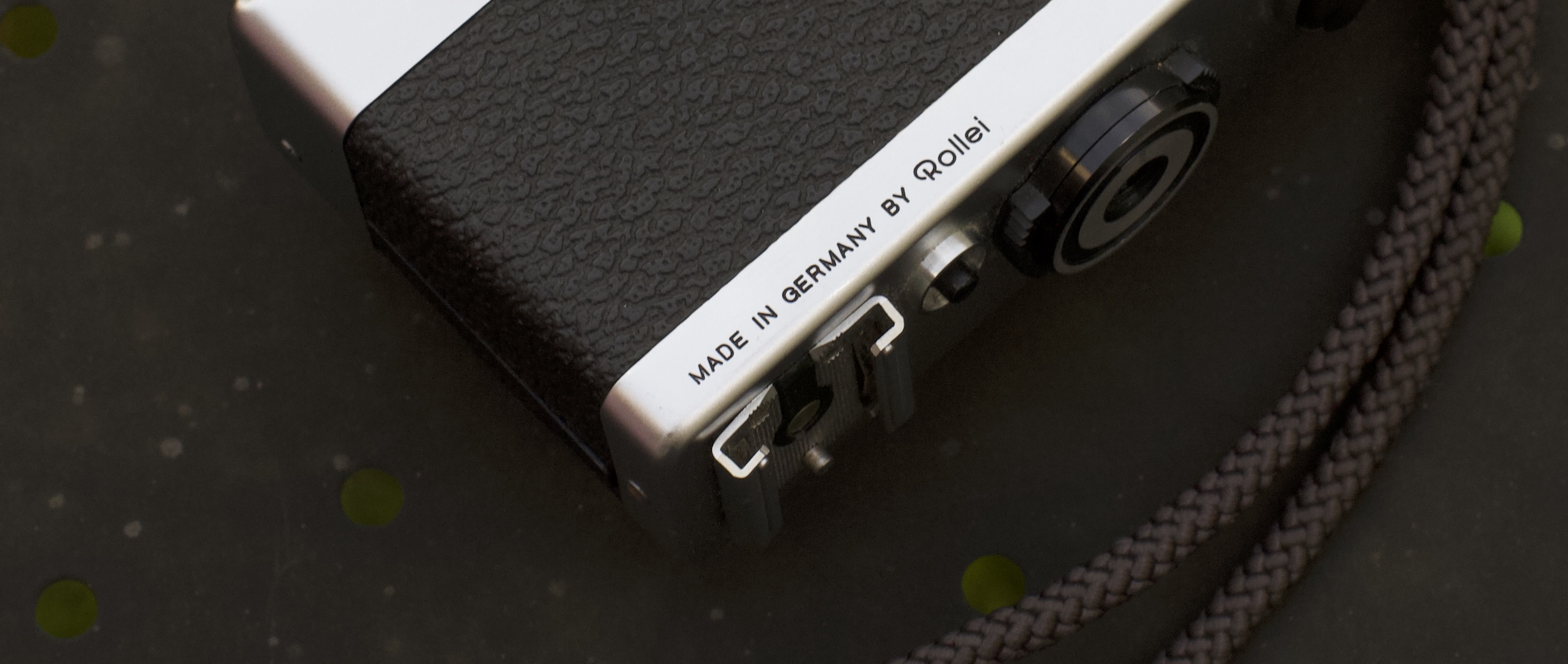 Earlier examples were made and assembled in Germany, with later production shifting to Singapore.
The B35 (and its later sibling, the Rollei 35 LED) typically sells for 30-50% less than comparable Tessar or Sonnar-equipped models, and its higher production numbers mean you're more likely to find one without engaging in bidding wars. This accessibility isn't just about saving money—it fundamentally changes how you use the camera. You bring it along for adventures. You actually shoot with it. And isn't that the whole point? These machines were built to make photographs and be tools of our creative expression.
Consider the B35
The Rollei B35 won't win any spec sheet battles against its premium siblings. It never was meant to. What Rollei created in 1969 was something different: a camera stripped of prestige but not of purpose. Battery-free metering. Controls that stay out of your way. A price that lets you actually use it.
Fifty-five years later, the "budget" Rollei has outlasted countless batteries, survived meters that faded in its pricier cousins, and continues to make photographs in hands that aren't afraid to take it anywhere. Heinz Waaske designed the Rollei 35 to be the smallest full-frame camera in the world. The B35 might just be the most practical one.
We occasionally have cameras from the Rollei 35 family in stock—check out our store.
Further reading:
- Camera-Wiki: Rollei 35 — Comprehensive technical specifications and history of all Rollei 35 variants
- Rolleigraphy: Rollei 35 — Detailed resource dedicated to the Rollei 35 series
- Rollei 35 Operation Manual (PDF) — Original manual covering controls, loading, shooting, and practical hints
Sample photographs shot on the Rollei B35 with Triotar 40mm f/3.5:
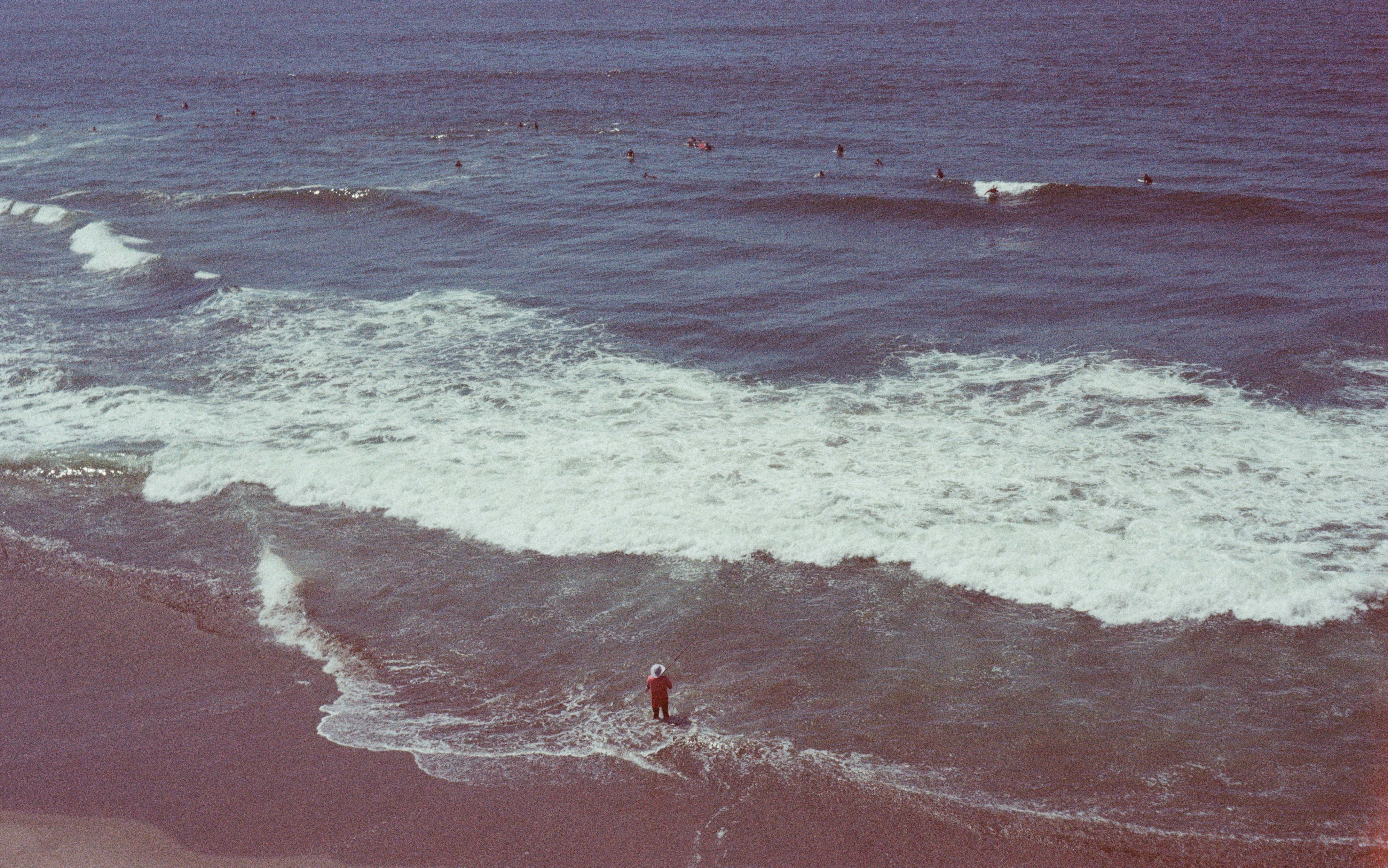 A man fishes from Ocean Beach in San Francisco, California. Kodak Vision 5201 ECN-2, ISO 50. The long-distance sharpness reflects Zeiss optics quality, even in this "lesser" form.
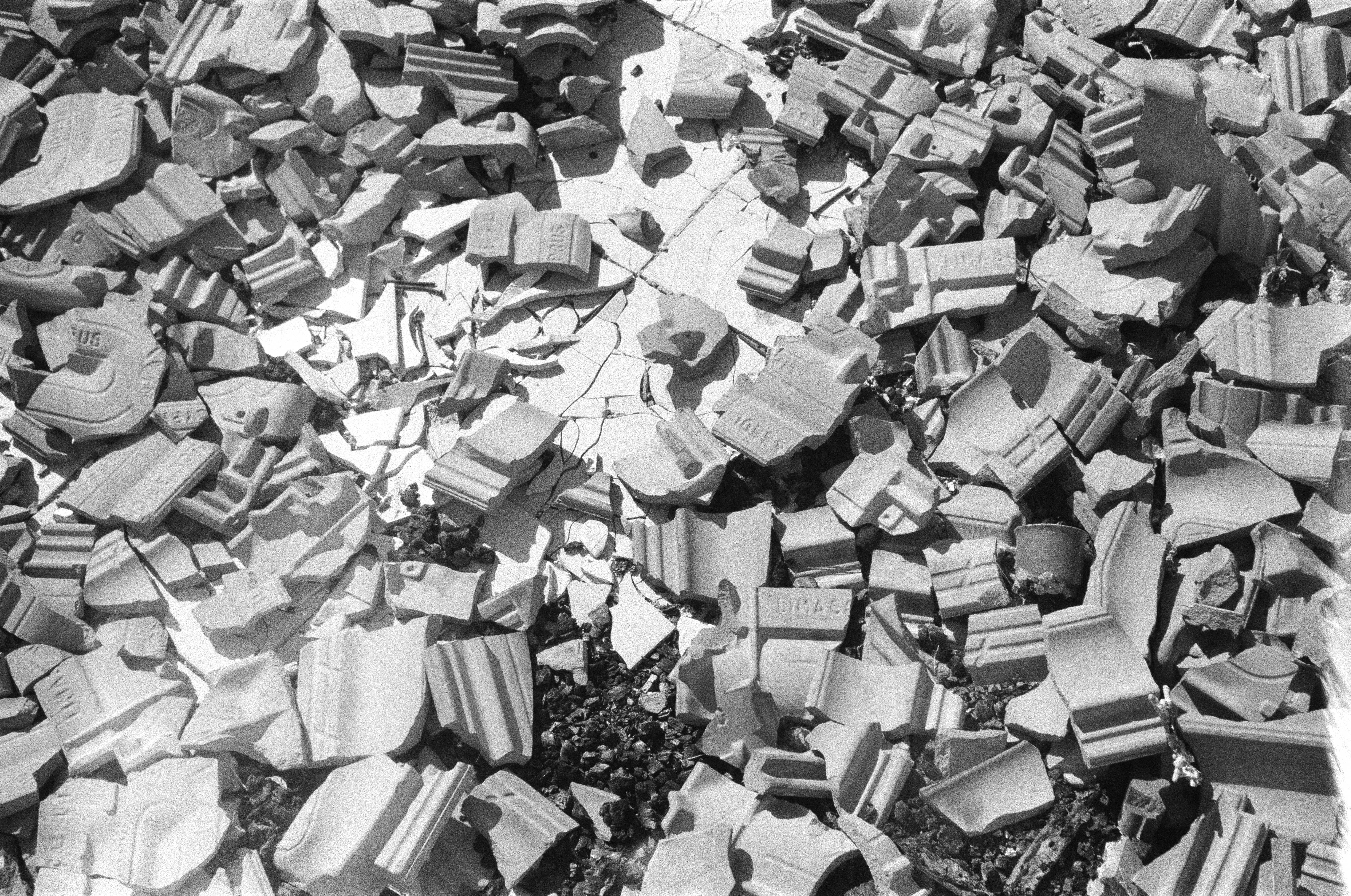 Site of kitchen from within home burned by forest fire in Paramytha, Cyprus. Rollei Paul & Reinhold 100th Anniversary, ISO 640. Short-distance sharpness can easily be attained with modern, high-speed film and stopping down the aperture.
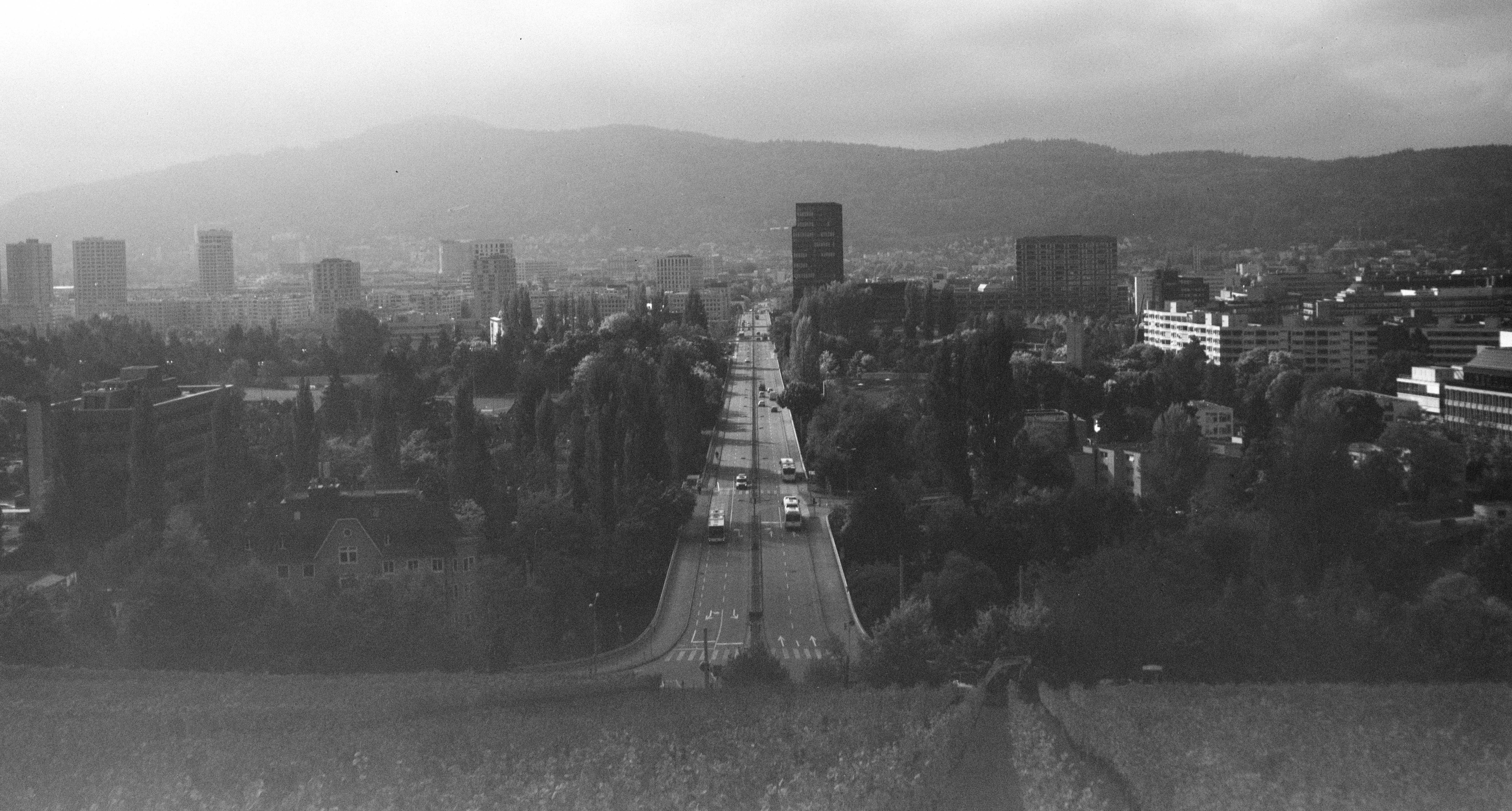 Looking towards the Europabrücke, Höngg neighborhood in Zürich, Switzerland. Kodak Technical Pan, ISO 50. I learned with this film that it likes bright light, and this could have come out better, but I love the feel.