Kodak Technical Pan 2415 Review: The Highest-Resolution 35mm Film Ever Made
Kodak Technical Pan (2415)
$24.99 · 35mm · 36 exp · Aug 2003
In 35mm black-and-white photography, there's a hierarchy of sharpness most photographers accept as settled. Ilford Delta 100 is sharp. Kodak T-Max 100 is sharper. But one film consistently outresolves them both, and almost everything else in the format: Kodak Technical Pan 2415.
Technical Pan wasn't designed for photographers. It was designed for scientists, astronomers, and intelligence analysts who needed to extract maximum information from a 35mm frame. That it can also produce strong pictorial images was almost incidental.
What Made Technical Pan Different
The numbers are genuinely remarkable.
Resolving power: 320 line pairs per millimeter at 1000:1 contrast. For comparison, T-Max 100 resolves around 200 lp/mm, and most conventional films top out at 100–150 lp/mm. Technical Pan could resolve detail finer than many medium format films.
Grain: RMS granularity of 8 at pictorial development times. Essentially invisible at any normal enlargement size. A 16x20 print from a 35mm negative shows no grain structure to speak of.
Tonal range: This is where things get interesting. Technical Pan's native contrast is extremely high—designed for document copying and lithographic work where you want pure black, pure white, and nothing in between. But with the right developer, it transforms into a continuous-tone film with extraordinary tonal separation.
The secret was always in the developer.
The Developer Question
Kodak sold Technical Pan with the understanding that it would be processed in high-contrast developers for technical applications. They also published recommendations for "pictorial" use—lower-contrast development that brought out the film's full tonal range.
The original solution was Kodak Technidol LC, a developer formulated specifically for Technical Pan. Technidol coaxed the film to its pictorial best: smooth gradation, full shadow detail, and that exceptional sharpness rendered in a way that worked for photographs of people and places.
Technidol was discontinued along with the film in 2004. Photographers have since found alternatives:
POTA (Phenidone Only, Thank you Ansel): A simple two-ingredient developer—phenidone and sodium sulfite—that produces excellent pictorial results. Named in tribute to Ansel Adams' work with similar low-contrast formulations.
TD-3: A homebrew formula that mimics Technidol's behavior. Recipes are widely available and the chemicals are inexpensive.
Rodinal at extreme dilutions: Some photographers report success at 1:200 or 1:300 with extended times, though this requires careful testing.
Caffenol: Coffee-based developers can work surprisingly well with Technical Pan's emulsion characteristics.
The point is: commit to your developer before you shoot. Technical Pan in D-76 or HC-110 produces harsh, high-contrast negatives unsuitable for pictorial work. Good results require intention.
Shooting Technical Pan: Slower, Not Slow
Technical Pan is rated at ISO 25 for pictorial use. That sounds restrictive on paper, but in practice it's perfectly workable for daylight handheld shooting.
Apply Sunny 16: in open daylight at f/16, you're at 1/25s. Open up to f/8 and you're at 1/100s. f/5.6 puts you at 1/250s. With a steady camera, a competent lens, and decent technique, 1/30s handheld is achievable in slightly softer light without breaking a sweat. Pair Technical Pan with a Rollei 35 or a Leica with a sharp 50mm and it becomes a daylight companion, not a tripod-only specialty film.
Where it gets harder is shade, overcast, and indoors. There, you'll want a tripod or you'll need to push your handheld limits. But that's true of any ISO 25–50 emulsion. Technical Pan isn't unusual in this regard—it's just on the slower end of what most modern photographers shoot.
What is unusual is the latitude: there isn't much. Technical Pan rewards careful metering and punishes sloppy exposure. Underexposure blocks up the shadows; overexposure blows the highlights. A handheld incident meter or careful spot reading is the right move. Slight overexposure is safer than underexposure—protect the shadows.
In a way, the discipline this film requires is a feature. You can't spray and pray. You study the light. You wait for the moment. You commit. In an era of motor drives and infinite digital frames, Technical Pan returns you to a more deliberate way of working.
 Technical Pan's resolution captures detail that would challenge many medium format films. Tonal gradation in the shadows depends entirely on proper pictorial development.
Why It Was Discontinued
Kodak never released sales figures, but the writing was on the wall by the early 2000s. Technical Pan served two narrow markets: scientific and technical users who needed maximum resolution, and a small community of fine-art photographers who embraced its demanding workflow.
Digital was already eating both. Scientific imaging moved to CCD sensors. Fine-art photographers had more forgiving films to choose from. The specialized developer added another barrier to entry.
In 2004, Kodak announced the discontinuation of Technical Pan along with several other specialty films. The last batches shipped, and that was that.
Or so we thought.
Shooting Technical Pan Today
Here's the remarkable thing: properly stored Technical Pan is still entirely shootable. Its extremely fine grain and stable emulsion mean it ages better than many faster films. Cold-stored stock from the early 2000s—or earlier—can still produce excellent results.
We currently have factory-boxed rolls in Film Fridge with expiry dates of August 2003 and May 1984. Yes, 1984. Over forty years old.
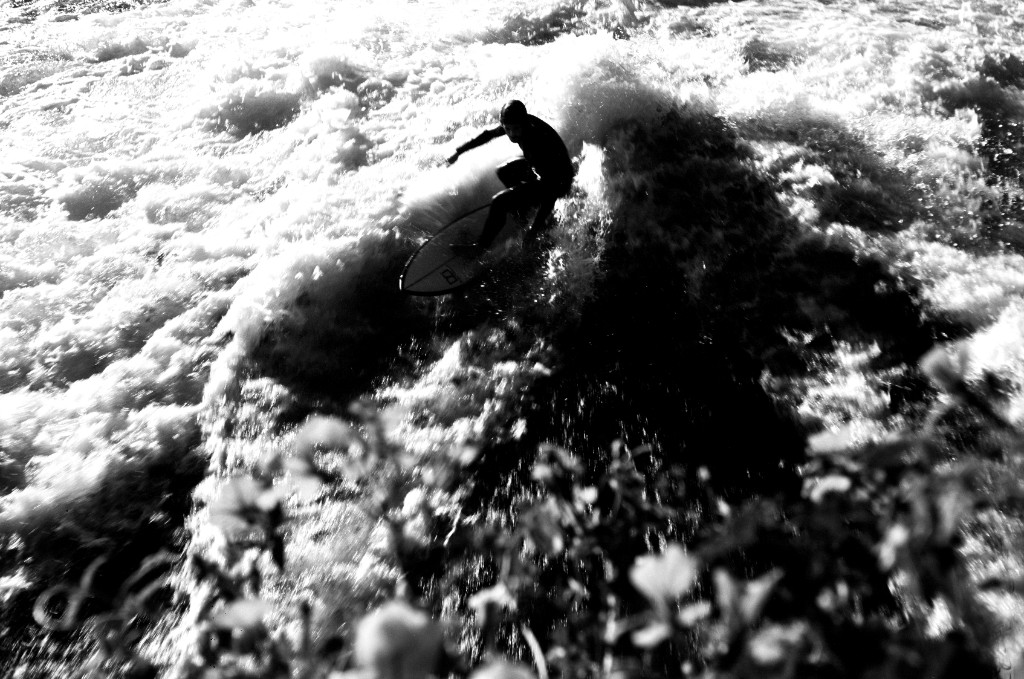 Technical Pan rewards precision—there's no hiding behind latitude here.
The 1984 stock will likely show some base fog and slightly reduced sensitivity (rate it at ISO 12–16 instead of 25), but the fundamental character remains. That extraordinary resolution doesn't fade with age.
We also have hand-rolled cassettes bulk-loaded from longer rolls, which we rate at ISO 64 for pictorial use. These offer a more economical way to experiment with the emulsion before committing to the boxed stock.
Practical Tips
Metering: Use a handheld incident meter when possible. The narrow latitude punishes poor metering. When in doubt, protect the shadows.
Lenses: Technical Pan reveals every flaw in your optics. Dust, fingerprints, and inferior glass will show. Use your best glass and clean it carefully.
Camera technique: Good handheld technique—elbows tucked, breath held, shutter squeezed not stabbed—matters more here than with faster films. The reward is detail you didn't know your camera could capture.
Developer: Commit before you shoot. POTA is the most accessible modern option; the chemicals are cheap and the formula is simple. Test with one roll before shooting anything important.
Subjects: Technical Pan loves texture, detail, and tonal complexity. Architecture, landscapes, and still life work beautifully. Portraits can be challenging—the film sees everything, including skin texture. Softer lighting helps.
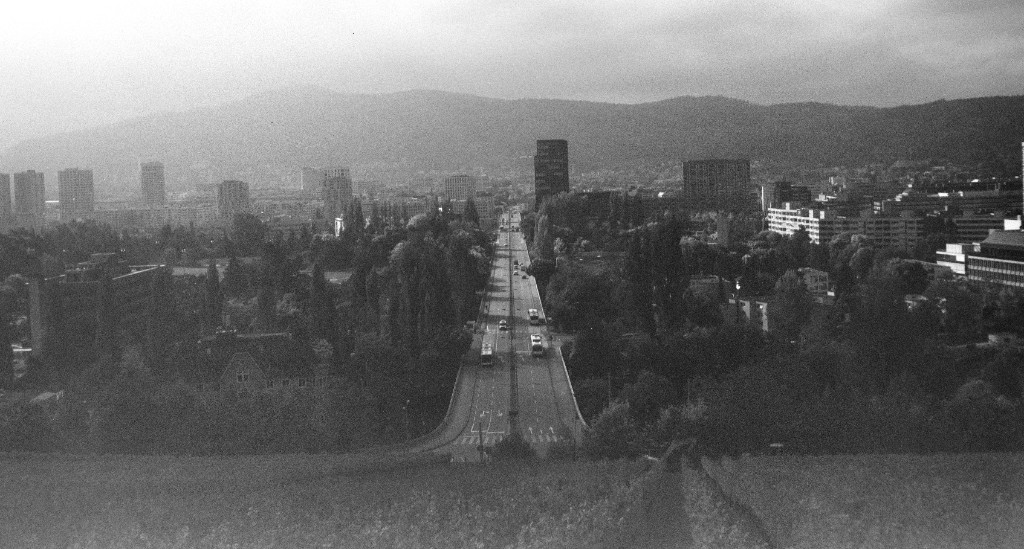 Technical Pan excels at architectural detail and subtle tonal gradations in stone and concrete.
Still Worth Shooting
Twenty-two years after discontinuation, Technical Pan still has a small, devoted following. It was never easy to use, and it was never forgiving. But with the right developer and the right light, it produced images that other 35mm films simply couldn't.
The grain is essentially invisible. The resolution is unmatched in the format. The tonal gradation—properly developed—is genuinely beautiful.
Is it practical for everyday shooting? Mostly, yes—if you're shooting in daylight and you're willing to slow down. Is it forgiving? Not at all. But for what it does—pure resolution and grain-free tonal rendering in a 35mm frame—there isn't really a substitute.
We have a small supply in Film Fridge—both factory-boxed rolls and hand-rolled cassettes. The factory closed in 2004 and it's not coming back. While we try to source new stock for the store from time to time, it's hard to come by.
If you've been curious about how 35mm at the resolution limit looks on the negative, this is a good chance to find out.
Further reading:
- Kodak Technical Pan 2415 Datasheet (PDF) — Original Kodak specifications
- Kodak Technical Pan 2415 Extended Data (PDF) — Additional technical information
- The Caffenol Cookbook — Alternative development techniques
- Photrio: Black-and-White Film & Developer Discussion — Community formulas, tips, and Technical Pan threads
Technical Pan is available in Film Fridge.
Kodak Technical Pan (2415)
$24.99 · 35mm · 36 exp · Aug 2003