Kodak T400CN Film Review: The Chromogenic B&W That Prints Warm
Kodak T400CN
$6.99 · 35mm · 24 exp
There are two things worth noticing about a roll of Kodak T400CN before you ever load it into a camera. The first is the orange-pink film base, which looks exactly like a strip of color negative film and nothing like a roll of Tri-X. The second is the small "Process C-41" notation on the cassette, sitting where you would normally expect to see "Process B&W" or some variant of D-76 instructions.
Both are true. T400CN was a black-and-white film that produced no metallic silver image, used color negative chemistry, and printed warm on color paper by design. It was Kodak's chromogenic answer to an Ilford product line that had been quietly winning the convenience argument for nearly two decades, and it remains one of the more interesting hybrid emulsions to come out of the Rochester research operation in the last quarter century.
We currently have a small batch of T400CN in Film Fridge. What follows is context for that stock: what the film actually is, how it ended up the way it did, why the sepia tonality in our sample frames is engineered rather than accidental, and what to expect from a cold-stored roll today.
What a chromogenic black-and-white film actually is
A conventional black-and-white film works the way every silver-gelatin emulsion has worked since the late nineteenth century. Silver halide crystals exposed to light form a latent image; a developer reduces those exposed crystals to opaque metallic silver; a fixer removes the unexposed halide. The final image is silver — physically present in the gelatin, visible under a microscope as discrete grains, archivally stable for a century or more if processed and stored properly.
A chromogenic film does something different. The silver halide still records the exposure, and a developer still attacks the latent image — but the developer is not reducing the silver to make the picture. The developer is being oxidized by the development reaction, and that oxidized developer combines with dye couplers built into the emulsion to form small clouds of organic dye. After development, a bleach converts the metallic silver back to silver halide, and a fix removes all of it. What remains in the gelatin is dye, not silver. The image you see is a collection of dye clouds; the silver that made the chemistry possible has been washed out the drain.
This is the same process Kodak invented for color negative film in the late 1930s — Kodachrome's contemporary alternative, eventually formalized as the C-41 process in 1972. C-41 is the chemistry that runs at every one-hour photo lab. It is fast, standardized, automated, and tolerant of mild abuse. A roll of T400CN going through a C-41 line is processed alongside rolls of Portra and Gold, with no special handling.
The trick with chromogenic black-and-white is to design the dye couplers so that the three dye clouds — typically a yellow, a magenta, and a cyan, the same trio used in color negative — combine to render something close to neutral gray across the tonal range. The image is made of color dyes, but those dyes are tuned to add up to monochrome. Almost.
We'll come back to the "almost."
The Ilford lead and Kodak's late entry
The first chromogenic black-and-white film for general use was Ilford XP1, introduced in 1981. Ilford was reading the same minilab industry data that everyone else was: by the early 1980s, the overwhelming majority of consumer film going through commercial labs was C-41 color negative, and any black-and-white film that required a separate process was inherently a niche product with longer turnaround times and higher costs. XP1 was Ilford's bet that some photographers — particularly working photographers who wanted to drop a roll at a one-hour lab and have black-and-white prints back the same afternoon — would value the convenience more than the silver image.
XP1 was followed by XP2 in 1992 and XP2 Super in 1996 — the formulation that is still in production today, more than thirty years later. XP2 Super is one of the most successful black-and-white films of the last quarter century, and it survives precisely because no widespread silver black-and-white processing infrastructure exists at the consumer level any more, while C-41 lines still run in every working photo lab and minilab.
Kodak watched all of this and did very little, for a long time. Their professional black-and-white lineup — Plus-X, Tri-X, the T-Max family — was strong enough that the chromogenic market did not feel urgent. There was no Kodak equivalent to XP1 or XP2 throughout the 1980s and most of the 1990s.
That changed in late 1998 with the introduction of Kodak Professional T400CN.
What the "T" in T400CN means
The name is unusually informative. T400CN stands for: T-Grain emulsion, ISO 400, C-41 Negative process. Each of those is a real claim about the film's design.
T-Grain is Kodak's tabular silver halide technology, introduced in 1986 with the first T-Max emulsions. Conventional silver halide crystals are roughly equiaxial — pebble-shaped, with similar dimensions in all three axes. Tabular grains are flat, plate-like crystals with a much larger surface-to-volume ratio. A tabular grain catches more light per unit of silver, which means an emulsion built with T-Grain technology can be made faster, or finer-grained at a given speed, than an equivalent conventional emulsion. T-Max 100 and T-Max 400 were the first major commercial application of the technology, and they reset the resolution-versus-speed expectations for 35mm black-and-white photography.
T400CN inherited the T-Grain platform. Even though the final image is made of dye rather than silver, the exposure is still happening in silver halide crystals, and the structure of those crystals determines the granularity and sharpness of the dye clouds that get built on top of them. A finer, more efficient silver halide gives you finer, more efficient dye clouds.
The result, when T400CN launched, was a film with measurably finer apparent grain than any silver-gelatin ISO 400 black-and-white film Kodak made at the time, including Tri-X. At box speed, T400CN was — and is — extraordinarily smooth for its sensitivity. It also held a wider exposure latitude than a typical silver film, with roughly six stops of usable range on a single roll. Many photographers rated the same roll anywhere from EI 100 to EI 800 depending on the scene and let the latitude absorb the variation.
This was, by 1998 standards, a serious piece of professional film engineering. Kodak was not playing catch-up to Ilford so much as redefining what a chromogenic black-and-white film could look like.
The warm cast is engineered, not accidental
This is the part of the T400CN story that matters most for anyone holding a print or a scan and wondering why the image looks the way it does.
Look at the sample frames below. They are all from rolls of T400CN out of our current batch, scanned with a straightforward hybrid workflow — no special toning, no creative color treatment in post. The images are, recognizably, sepia. Warm browns in the highlights, slightly cooler shadows, a faint pink in the midtones. They look like black-and-white photographs that have been gently aged. They are not aged. That is the film working as designed.
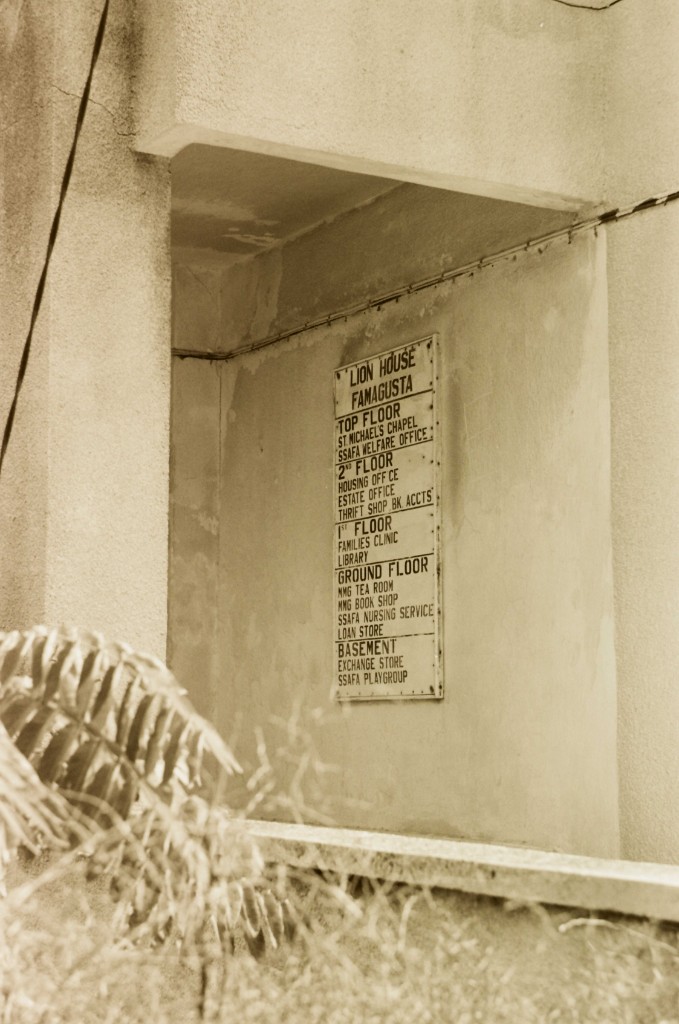
Kodak made a specific decision when they formulated T400CN: the dye couplers were tuned so that the film would print warm on standard color paper without correction. In practice, that means a minilab in 1999 running a strip of T400CN through a Noritsu printer onto Endura paper, with no operator intervention, would produce a print that looked sepia-toned. The film was deliberately tipped slightly toward yellow and magenta in the densities, with the cyan dye held back. The orange-pink film base contributes to the cast as well — the same orange mask that color negative films use to correct for dye absorption errors during printing, but here biased to leave a warm residual in the print.
Ilford went the other direction. XP2 Super is tuned to print neutral gray on color paper without correction. An XP2 Super negative through the same Noritsu printer, on the same Endura paper, produces a print that looks like a conventional black-and-white photograph — neutral midtones, no color cast. This was Ilford's pitch to working photographers who needed black-and-white prints that looked like black-and-white prints, regardless of which lab they used.
Kodak's pitch was different. T400CN was sold as a professional film with a distinctive character — a slightly warm, slightly pictorial tonality that distinguished its prints from cold neutral grays. Some photographers found this beautiful. Some found it frustrating. Either way, it was intentional.
The same warmth comes through clearly in hybrid scanning workflows today. When the orange base is inverted in software like ColorPerfect or Negative Lab Pro, the warm bias is preserved unless explicitly desaturated. Scanning T400CN as a color negative and choosing not to neutralize the cast — which is what we have done with our sample frames — produces images that read as sepia because the film is telling you, accurately, what it was designed to do.

If you want a neutral black-and-white image out of a T400CN scan, it is straightforward to desaturate the file. If you want a print that reads neutral, you can correct the filtration on color paper, or print the scan on a dedicated black-and-white inkjet profile. None of this is hard. But the out-of-the-box character of T400CN is the warmth, and we think that's worth preserving — both because it's an accurate reading of the film's design, and because the sepia palette suits the kind of work the film was made for.
Provenance and the chromogenic lineage at Kodak
T400CN had a relatively short life under that exact name. Kodak introduced it in October 1998 and renamed it Portra 400 BW in 2001, when the Kodak Professional film line was consolidated under the Portra brand. The Portra 400 BW emulsion was substantially the same film, with minor tuning to align it visually with the Portra color stocks alongside it on dealer shelves.
In late 2004, Kodak rolled out BW400CN — another reformulation, again chromogenic, again T-Grain, with the warm cast pulled back slightly toward neutral. BW400CN had the longest run of any of the three: it stayed in production for nearly a decade before being discontinued in September 2014. With its end, Kodak left the chromogenic black-and-white market entirely. Ilford XP2 Super remains the only chromogenic black-and-white film in continuous production from any major manufacturer.
Every roll of T400CN that exists in the world today was manufactured between roughly 1998 and 2001. Our batch carries an expiry of approximately 2001, which places it near the very end of T400CN production, before the Portra 400 BW rebrand.
The film was coated at Kodak's Building 38 in Rochester, on the same coating lines that produced the T-Max family. There is no surviving factory in the world that could replicate it. The dye coupler chemistry, the orange mask, the T-Grain structure tuned for chromogenic development — these were Kodak Park engineering specifications, and they retired with the building.

Why it was discontinued
The collapse of the consumer minilab market through the 2000s pulled the floor out from under every chromogenic black-and-white film. The convenience argument that justified XP1, XP2, T400CN, Portra 400 BW, and BW400CN was that you could drop a roll at any one-hour lab. By 2010, "any one-hour lab" no longer meant much — most consumer C-41 lines had closed, and the photographers still shooting film were increasingly committed enough to develop their own.
At the same time, the rise of hybrid workflows — scan, then edit — undermined the other argument for chromogenic black-and-white, which was the in-lab neutral print. Once a photographer is scanning their own negatives, the practical difference between a chromogenic and a conventional black-and-white film is mostly a question of grain structure, latitude, and base color. A scanned roll of HP5 Plus and a scanned roll of XP2 Super, both processed correctly, are easier to interpolate than the workflow differences would suggest.
Kodak made the call in 2014. Ilford has held on with XP2 Super, partly because their professional lab partnerships kept the convenience pipeline alive longer, and partly because XP2 Super's neutral character made it useful as a high-latitude general-purpose film for hybrid shooters who wanted something forgiving.
Shooting our cold-stored T400CN today
A few practical notes for anyone working with our current batch.
Rate it at or near box speed. Cold-stored T400CN from the very end of its production run holds up well. The chromogenic process is more forgiving of base fog than silver-gelatin black-and-white, because the bleach step removes the metallic silver entirely — so age-related silver fogging contributes much less to the visible image than it would in Tri-X of the same vintage. You can shoot at EI 400 with confidence. If you want richer shadows, rate it at EI 200; the latitude will handle it.
Process as standard C-41. Any current C-41 lab can run this film. No special instructions are required. The same chemistry that develops Portra will develop T400CN. If you are processing at home with a Cinestill Cs41 kit or similar, follow the standard C-41 instructions.
Decide what to do about the warmth. This is a creative choice, not a defect to correct. If you want the sepia-warm character that defines the film, scan as color and don't desaturate. If you want neutral black-and-white, desaturate after inversion, or batch-process with a neutral profile. Both are legitimate. The film itself is agnostic; the decision is yours.
Lenses and metering. T400CN is a fine-grained, high-latitude film. It rewards good glass — fine detail comes through cleanly — and it is forgiving of metering errors in either direction. Aperture-priority shooters with reasonably accurate metering will not have to think hard about this film. Spot meter readers can be more aggressive with shadow placement than they would be with Tri-X, knowing the toe of the curve has more headroom.
Subjects. Like most chromogenic films, T400CN is at its best on subjects with continuous-tone surfaces — skin, fabric, weathered wood, stone. The smooth grain and wide latitude let it render gradual tonal transitions without the abrupt grain texture that silver-gelatin films introduce. Portraits, particularly outdoor portraits in soft light, are a natural fit. Architectural and landscape work also looks excellent, especially when the slightly warm cast complements the subject — autumn foliage, stone facades, late-afternoon light.

Archival considerations. A finished T400CN negative is, like any C-41 negative, an organic dye image rather than a silver image. Dye stability is generally good with proper storage — cool, dark, dry — but it is not the century-plus stability of well-fixed silver. Treat your processed T400CN negatives like color negatives: store them carefully, and consider scanning them as the primary archival record.
A curatorial note
T400CN is one of the few films we sell that genuinely changed character when its successor arrived. Portra 400 BW was close. BW400CN was closer to neutral. Today's photographers who learned chromogenic black-and-white through XP2 Super sometimes find T400CN's warmth surprising, even off-putting, when they first see a frame. It does not look like the chromogenic film they know.
That difference is the point. T400CN was a 1998 Kodak Professional product with a deliberate stylistic identity — warm, pictorial, intentionally distinct from the cold neutrals coming out of Mobberley. The fact that its character now reads as nostalgic, as period-specific, is partly because the film stopped being made shortly after, and partly because the warm-toned chromogenic look itself fell out of professional fashion in favor of the neutral hybrid scan.
If you'd like to take a roll out, we have a small supply in Film Fridge. When it's gone, we'll keep an eye out for more — but production ended in Rochester more than two decades ago, and there is a finite quantity of factory-boxed stock left in the world. That's the nature of it.
For broader context on the cold-storage logic behind everything we sell, see Film Fridge. For comparison points among other Kodak emulsions of the era, our Technical Pan notes cover the opposite end of Kodak's professional black-and-white lineup — slow, silver, and engineered for resolution rather than convenience.
Further reading:
- Kodak T400CN Datasheet (PDF) — Original Kodak specifications
- Ilford XP2 Super Datasheet (PDF) — The neutral-tuned chromogenic, for comparison
- Kodak Portra 400 Datasheet (PDF) — Same C-41 chemistry, color counterpart
Kodak T400CN is available in Film Fridge while supplies last.
Kodak T400CN
$6.99 · 35mm · 24 exp